
Epeolus splendidus
Onuferko, 2018
Splendid Cellophane-cuckoo Bee
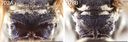
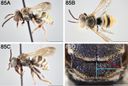
Epeolus splendidus is a cleptoparasitic (cuckoo) described by Onuferko in 2018. As a member of the Epeolus, it invades the nests of polyester bees in the genus Colletes, where females lay that hatch into larvae that kill the egg or larva and consume the stored pollen. The species name 'splendidus' refers to its attractive appearance, characterized by short black, white, red, and yellow hairs forming distinctive patterns. Like other Epeolus species, it lacks the branched hairs typical of pollen-collecting bees due to its parasitic lifestyle.
Pronunciation
How to pronounce Epeolus splendidus: /eˈpe.o.lus splɛnˈdi.dus/
These audio files are automatically generated. While they are not always 100% accurate, they are a good starting point.
Identification
Distinguished from other Epeolus by its specific hair color pattern of black, white, red, and yellow. The combination of small size, smooth non-fuzzy appearance, and distinctive coloration separates it from Colletes species. Identification to species level requires examination of diagnostic morphological features described in Onuferko (2018).
Images
Appearance
Small , 5.5–10.0 mm in body length. Possesses very short black, white, red, and yellow hairs that form beautiful patterns across the body. Lacks the characteristic fuzzy appearance of pollen-collecting bees, instead appearing relatively smooth and -like due to the absence of long branched hairs. present, with males having elongated mouthparts () for nectar feeding.
Distribution
Known from limited localities; specific geographic range not fully documented beyond type localities.
Diet
Host Associations
- Colletes - nest Invades nests of polyester bees in this ; females lay in
Life Cycle
Females locate nests and lay in provisioned by Colletes females. Larvae hatch and seek out host eggs or larvae, killing them before consuming the stored pollen. Development occurs within the host nest; emerge to mate and seek new host nests.
Behavior
Males patrol flowers and potential nesting areas. Females search for nests, likely using chemical cues to locate Colletes nesting sites. Kleptoparasitic involves covert entry into host nests to deposit .
Ecological Role
Human Relevance
Contributes to scientific understanding of diversity and cleptoparasitic evolution. No known direct economic importance; rarity makes it a subject of conservation interest.
Similar Taxa
- Epeolus attenboroughiSame , described in same revision; both are North American cuckoo bees with similar and appearance, distinguished by specific hair patterns and morphological details
- Nomada speciesOther cleptoparasitic bees with similar cuckoo lifestyle and -like appearance; distinguished by different associations (typically Andrena or Melitta rather than Colletes) and antennal grabbing during mating not reported for Epeolus
- Colletes species bees that Epeolus splendidus parasitizes; distinguished by presence of branched pollen-collecting hairs, nest-building , and typically less vivid color patterns
More Details
Taxonomic context
One of 15 new Epeolus described by Onuferko in 2018, bringing the total known North American species to 43. The name 'Epeolus' is speculated to derive from Epeus/Epeius of Greek mythology, the soldier who devised the Trojan Horse, reflecting the deceptive parasitic strategy of these bees.
Detection challenges
Cuckoo bees are rarer than their and relatively small, making them likely to go undetected. Their -like appearance further contributes to underreporting, as they may be mistaken for non- Hymenoptera.