
Epeolus interruptus
Robertson, 1900
Interrupted Cellophane-cuckoo Bee
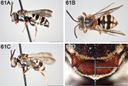
Epeolus interruptus is a cleptoparasitic (cuckoo) in the Apidae, native to North America. First described by Robertson in 1900, this invades the nests of polyester bees ( Colletes) to lay its . Like other cuckoo bees, females lack the branched body hairs used for pollen collection and instead rely on bees to provision their offspring. The species exhibits reduced pilosity compared to non-parasitic bees, giving it a -like appearance.
Pronunciation
How to pronounce Epeolus interruptus: /ɛˈpiːoʊləs ɪntəˈrʌptəs/
These audio files are automatically generated. While they are not always 100% accurate, they are a good starting point.
Images
Distribution
Recorded from North America and Middle America (Mexico and Central America). GBIF distribution records indicate presence in both regions.
Host Associations
- Colletes - kleptoparasiteEpeolus are known to invade nests of polyester bees in the Colletes. The female cuckoo bee lays her in the 's nest; upon hatching, the larva kills the host egg or larva and consumes the pollen provisions stored by the host female.
Similar Taxa
- Epeolus attenboroughiBoth are North American cuckoo bees in the Epeolus that parasitize Colletes nests. E. attenboroughi was described in 2018 and is known from Colorado and New Mexico, while E. interruptus has a broader distribution. E. attenboroughi is distinguished by specific color pattern differences in the short black, white, red, and yellow hairs.
- Epeolus pilosulusAnother rare North American Epeolus , historically confused due to rarity and similar cleptoparasitic lifestyle. E. pilosulus was thought extinct until rediscovered in Nova Scotia in the early 2000s; it is distinguished by pilosity and distribution patterns.