
Svastra
Holmberg, 1884
long-horned bees
Species Guides
10- Svastra aegis
- Svastra atripes(long-horned bee)
- Svastra compta(long-horned bee)
- Svastra duplocincta(long-horned bee)
- Svastra machaerantherae
- Svastra minima
- Svastra obliqua(sunflower bee)
- Svastra petulca(long-horned bee)
- Svastra sabinensis
Svastra is a of long-horned bees in the Apidae, tribe Eucerini. These solitary, ground-nesting bees are native to North America and are important of sunflowers and other members of the Asteraceae family. The genus has undergone taxonomic revision, with North American formerly placed in Svastra now moved to Epimelissodes. Females construct nests in hard-packed soil with arranged in spiral patterns, while males are known to form nighttime sleeping on vegetation.
Pronunciation
How to pronounce Svastra: //ˈsvaːstra//
These audio files are automatically generated. While they are not always 100% accurate, they are a good starting point.
Identification
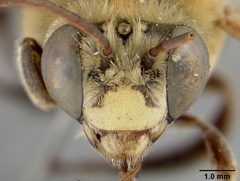
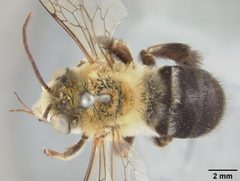
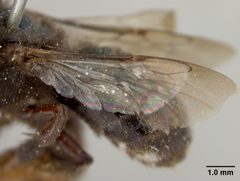
Svastra are characterized by long , particularly in males, which gives the group its of 'long-horned bees.' They are robust, medium-to-large bees with hairy bodies adapted for pollen collection. Females have scopae (pollen-collecting hairs) on the hind legs. The can be distinguished from the closely related Melissodes by subtle morphological differences in facial and leg structure; expert identification often requires examination of male genitalia. Species-level identification is challenging and typically requires knowledge.
Images
Habitat
Svastra nest in hard-packed soil, with females excavating burrows that have a single entrance. They forage in open areas with abundant flowering plants, particularly those in the Asteraceae . The sleeping of males form on sturdy vegetation such as stems and blossoms.
Distribution
North America. Distribution records include the United States, with specific observations from Vermont and California.
Seasonality
Active primarily in late summer and fall, coinciding with the blooming period of their preferred plants such as sunflowers and sneezeweed.
Diet
feed on nectar. Females collect pollen primarily from members of the Asteraceae , especially sunflowers (Helianthus), though they will visit other Asteraceae including sneezeweed (Helenium) and purple coneflower (Echinacea).
Host Associations
- Helianthus - pollen sourcePreferred pollen source
- Helenium - pollen sourceAsteraceae , visited for pollen
- Echinacea purpurea - pollen sourcePurple coneflower
- Triepeolus penicilliferus - of Svastra sabinensis nests
Life Cycle
Solitary bees with ground-nesting . Females excavate nests in hard-packed soil with a single entrance. Nests contain 5-7 arranged in a spiral pattern. Each cell is provisioned with pollen and nectar, and receives a single . The mature and postdefecating larva have been described for at least one . Development proceeds through egg, larval, and pupal stages before . Males do not participate in nest construction or provisioning.
Behavior
Females are solitary nesters, each constructing and provisioning her own burrow. Males exhibit a distinctive of forming nighttime sleeping on stems and flowers, often returning to the same perch repeatedly. These aggregations are typically single- clusters. Males are territorial and will defend floral resources by dive-bombing other . They settle in as light dims in the evening, with timing affected by temperature and weather conditions. Males cannot sting; only females possess a stinger.
Ecological Role
Important native , particularly of sunflowers and other Asteraceae. Their ground-nesting contributes to soil aeration. As for cleptoparasitic bees such as Triepeolus, they support higher in .
Human Relevance
Svastra are significant of native plants and agricultural crops, particularly sunflowers. They are featured in pollinator education and conservation efforts, including the book 'California Bees and Blooms: A Guide for Gardeners and Naturalists.' Their distinctive male sleeping make them accessible subjects for public engagement with native . They are not aggressive and males cannot sting; females may sting if handled but are generally not defensive.
Similar Taxa
- MelissodesClosely related long-horned bees in the same tribe Eucerini; males also form nighttime sleeping . Distinguished by subtle morphological differences, particularly in facial structure and male genitalia.
- EpimelissodesTaxonomic revision moved North American formerly in Svastra to this ; the two genera are morphologically similar and require expert examination to distinguish.
More Details
Taxonomic Note
North American formerly placed in Svastra have been moved to the Epimelissodes. The species formerly known as Svastra obliqua expurgata is now Epimelissodes obliqua expurgata. The genus Svastra in the strict sense may be restricted to South American species, though this revision is not universally reflected in all databases.
Male Sleeping Aggregations
Male sleeping are based on suitable perches rather than proximity to female nests, though they are typically within 100 yards of nesting areas. Females nest in the ground in burrows approximately pencil-diameter, sometimes with small soil piles resembling mini-volcanoes.
Sources and further reading
- BugGuide
- GBIF taxonomy match
- iNaturalist taxon
- NCBI Taxonomy
- Catalogue of Life
- Does Sneezeweed Make You Sneeze? | Bug Squad
- Outstanding PBS Deep Look Video: 'Why Do Sunflowers Face the Sunrise?' | Bug Squad
- A Big Bee Bash Is Beckoning: Learn About California's Native Bees | Bug Squad
- What's Not to Love About 'Boys' Night Out'? | Bug Squad
- A Push to Protect Pollinators | Bug Squad
- About Those Sleepovers... | Bug Squad
- The BeeSvastra sabinensis: Nesting Biology, Mature Oocyte, Postdefecating Larva, and Association withTriepeolus penicilliferus(Apidae: Apinae: Eucerini and Nomadinae: Epeolini)