Melissodes rivalis
Cresson, 1872
rival long-horned bee, Western Thistle Longhorn Bee
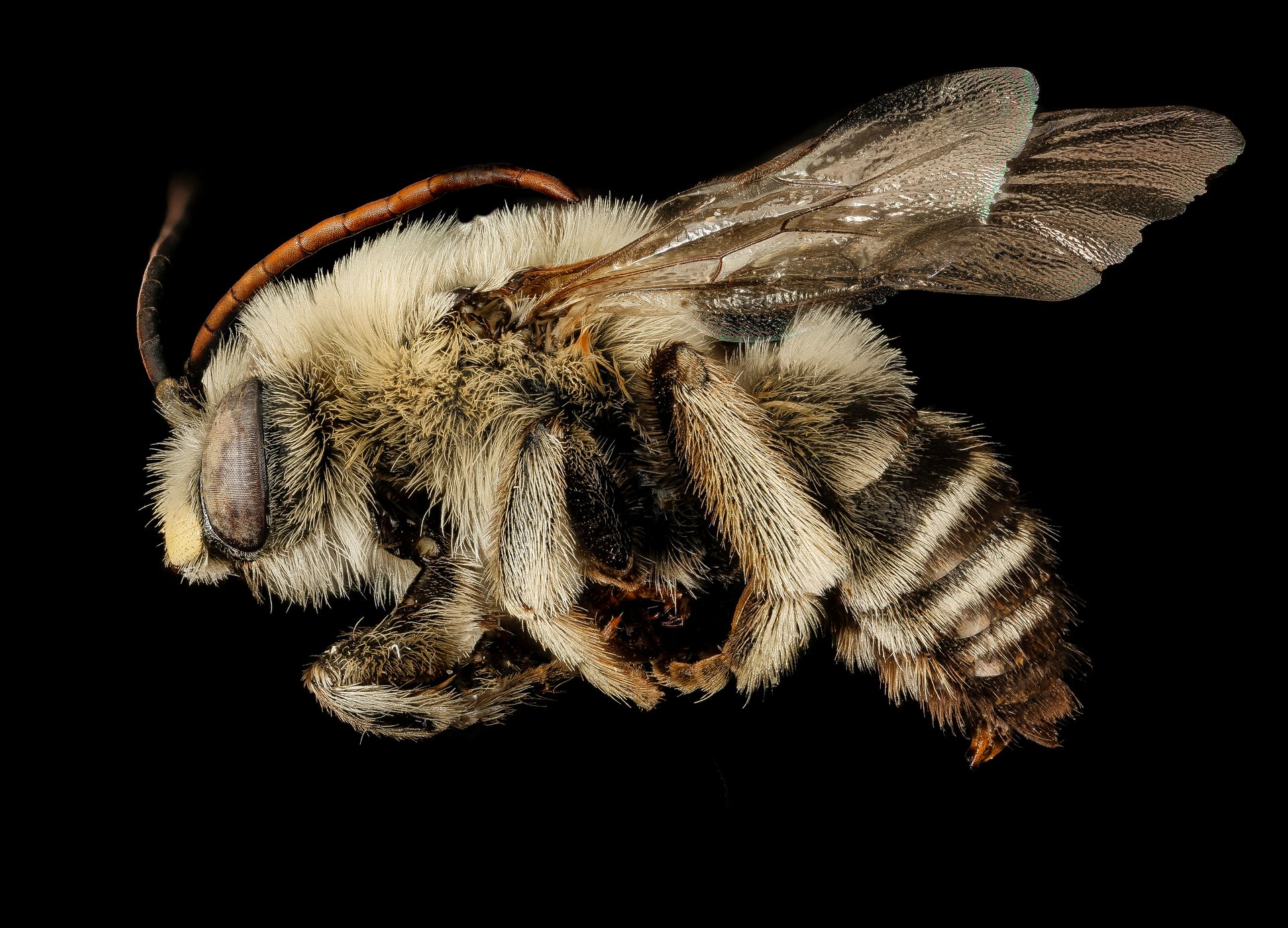
Melissodes rivalis is a solitary long-horned bee in the Apidae, native to northern North America. Males are distinguished by that may exceed their body length. Females construct individual underground nests and provision them with pollen, while males form sleeping on flower . The has been documented pollinating thistles (Cirsium sp.).


Pronunciation
How to pronounce Melissodes rivalis: //mɛˈlɪs.oʊˌdiːz ˈraɪvəlɪs//
These audio files are automatically generated. While they are not always 100% accurate, they are a good starting point.
Identification
Males have occasionally longer than the body, a diagnostic trait of the Eucerini tribe. Body length 11–14 mm from to . Elongated body form resembling a smaller . Dark gray abdomen with white or cream-colored hair bands. Hyaline wings with faintly clouded beige margins. Dense setae on body and legs for pollen collection.
Images
Habitat
Open in northern regions. Females nest in burrows dug under bushes or brush vegetation, lined with wax-like material.
Distribution
Native to Montana; recorded in Idaho, Wyoming, Minnesota, and southern Canadian provinces including British Columbia, Alberta, Saskatchewan, and Manitoba.
Diet
forage for nectar and pollen. Has been observed pollinating Cirsium sp. (thistles).
Life Cycle
Females construct single-celled underground nests, each containing one provisioned with a pollen ball. Nests are typically isolated but may occur in loose . Developmental details beyond nesting not documented.
Behavior
Solitary; females work alone without colony assistance. Males sleep in on flower , inferred from related to provide warmth and protection. Males cannot sting. Females may sting if handled.
Ecological Role
Native , documented visiting thistles.
Similar Taxa
- Melissodes agilisSympatric with nearly identical male sleeping and ; distinguished by subtle structural differences requiring expert identification.
- Melissodes robustiorSympatric with similar male sleeping on flowers; identification requires examination of specific morphological characters.
- Svastra obliquaRelated long-horned bee with similar male roosting ; belongs to different but may co-occur in same .
Sources and further reading
- BugGuide
- Wikipedia
- GBIF taxonomy match
- iNaturalist taxon
- NCBI Taxonomy
- Catalogue of Life
- About Those Sleepovers... | Bug Squad
- The Year 2017: 'Survival of the Flittest' | Bug Squad
- What's Not to Love About 'Boys' Night Out'? | Bug Squad
- 2023: These Are a Few of My Favorite Things | Bug Squad
- Seen Any Monarchs Lately? | Bug Squad
- 'Bee' One in a Million | Bug Squad