
Melissodes dentiventris
Smith, 1854
long-horned bee
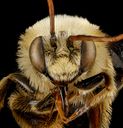
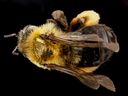
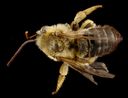
Melissodes dentiventris is a of long-horned bee in the Apidae, native to North America. Like other members of the Melissodes, males possess elongated that give the group its . The species is a solitary ground-nesting and contributes to pollination of native flora. Specific ecological details for M. dentiventris remain limited in published literature, with most behavioral observations documented for such as M. agilis.
Pronunciation
How to pronounce Melissodes dentiventris: /mɛˈlɪs.oʊˌdiːz ˌdɛn.tɪˈvɛn.trɪs/
These audio files are automatically generated. While they are not always 100% accurate, they are a good starting point.
Identification
Definitive identification of M. dentiventris requires examination of subtle morphological characters, particularly genitalic structures and specific tooth-like projections on the (implied by the specific epithet 'dentiventris,' meaning 'toothed belly'). Field identification to level is difficult and typically requires knowledge or microscopic examination. The species may be confused with other Melissodes species, especially M. agilis and M. robustior, which are more frequently photographed and discussed in popular literature.
Images
Habitat
Associated with open supporting flowering plants, including meadows, grasslands, and gardens. Specific habitat preferences for M. dentiventris are not well documented, though frequent areas with abundant Asteraceae and other composite flowers.
Distribution
North America. Precise range boundaries within North America are not well defined in available sources.
Life Cycle
As a solitary , females nest in the ground, excavating individual burrows. Development proceeds through , larval, and pupal stages within the nest . Detailed timing for M. dentiventris specifically is not documented in available sources.
Ecological Role
of native flowering plants. As with other solitary bees, contributes to functioning through pollen transfer, though specific plant associations for M. dentiventris are not recorded in available literature.
Human Relevance
Contributes to pollination in natural and agricultural landscapes. Not known to be aggressive; males cannot sting. No specific documented interactions with humans beyond general services.
Similar Taxa
- Melissodes agilisFrequently photographed and discussed in popular literature; males similarly exhibit long and sleeping on flowers. M. agilis is distinguished by behavioral traits (highly territorial males) and subtle morphological differences.
- Melissodes robustiorSimilar size and appearance; has been confused with M. dentiventris in field observations. Requires microscopic examination for definitive separation.
- Svastra obliquaClosely related long-horned bee in tribe Eucerini; males also sleep on flowers and have elongated . Distinguished by subtle morphological characters of the scopa and male genitalia.
More Details
Taxonomic note
The specific epithet 'dentiventris' (Latin: 'dens' = tooth, 'venter' = belly) refers to diagnostic abdominal characteristics visible upon close examination, though these are not described in detail in general sources.
Data limitations
Most detailed behavioral and ecological information available online pertains to M. agilis and M. robustior. Caution should be exercised in attributing these observations to M. dentiventris without verified records.
Sources and further reading
- BugGuide
- Wikipedia
- GBIF taxonomy match
- iNaturalist taxon
- NCBI Taxonomy
- Catalogue of Life
- About Those Sleepovers... | Bug Squad
- The Year 2017: 'Survival of the Flittest' | Bug Squad
- What's Not to Love About 'Boys' Night Out'? | Bug Squad
- 2023: These Are a Few of My Favorite Things | Bug Squad
- Seen Any Monarchs Lately? | Bug Squad
- 'Bee' One in a Million | Bug Squad