
Diadasia australis
(Cresson, 1878)
Cactus chimney bees
Species Guides
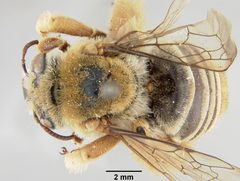
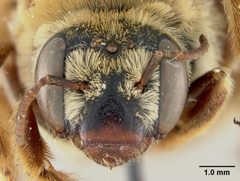
1Diadasia australis is a of chimney in the Apidae, found in Central America and North America. The species belongs to a commonly known as chimney bees or turret bees, characterized by their distinctive nest architecture. Three are recognized: D. a. australis, D. a. californica, and D. a. knabiana. The species is part of a group of solitary bees that construct above-ground turret structures at their nest entrances.

Pronunciation
How to pronounce Diadasia australis: //ˌdaɪəˈdeɪziə ɔːˈstreɪlɪs//
These audio files are automatically generated. While they are not always 100% accurate, they are a good starting point.
Images
Distribution
Central America and North America. GBIF records confirm presence in Middle America and North America.
Host Associations
- Opuntia - pollen Members of the Diadasia are typically pollen on cacti (Cactaceae), particularly Opuntia . This association is well-documented for the genus though specific confirmation for D. australis requires verification.
Similar Taxa
- Diadasia rinconisBoth are North American Diadasia ; D. rinconis is a well-studied Sonoran Desert species with documented mating and , but differs in geographic range and specific associations.
- Diadasia bituberculataAnother North American chimney ; D. bituberculata is a on bindweed (Convolvulaceae) in California and constructs similar turret nests, but differs in floral specificity and geographic range.
More Details
Subspecies
Three are recognized: Diadasia australis australis (Cresson, 1878), Diadasia australis californica (Cresson, 1878), and Diadasia australis knabiana Cockerell. The two subspecies described by Cresson in 1878 were originally published under the basionym Melissodes australis.
Nomenclatural note
The authority year is sometimes cited as 1878 and sometimes as 1879 in different sources; Cresson's original description appeared in 1878.
Sources and further reading
- BugGuide
- Wikipedia
- GBIF taxonomy match
- iNaturalist taxon
- NCBI Taxonomy
- Catalogue of Life
- The Glory of the Bindweed Turret Bees | Bug Squad
- Congratulations, Rei! | Bug Squad
- They Know Their Insects | Bug Squad
- Busy Bees: An Up-Close Look at One Bee Species' Scramble to Mate
- Destination Sonoran Desert: A time to sting for the Giant Hairy Desert Scorpion, 'Hadrurus arizonensis' — Bug of the Week
- Cimbicidae | Beetles In The Bush