
Centris nitida
Smith, 1874
Shining Oil-digger Bee
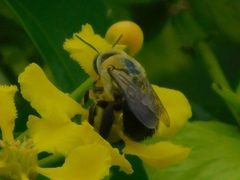
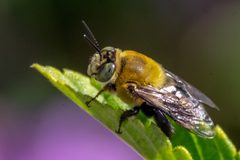
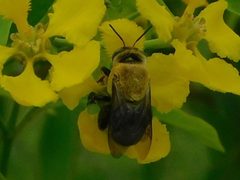
Centris nitida is a centridine in the Apidae, commonly known as the Shining Oil-digger Bee. The is native to Central America and has been introduced to Florida in the United States. It belongs to a specialized in collecting floral oils rather than nectar, using these oils to provision nests and feed larvae. Two are recognized: Centris nitida nitida and Centris nitida geminata.
Pronunciation
How to pronounce Centris nitida: //ˈsɛn.trɪs ˈnɪ.tɪ.də//
These audio files are automatically generated. While they are not always 100% accurate, they are a good starting point.
Images
Distribution
Native to Central America; introduced to Florida, United States. GBIF records indicate presence in Middle America, North America, and South America (including Brazil, São Paulo state).
Diet
females collect floral oils from oil-producing plants, including Krameria . These oils are mixed with pollen to feed larvae. The species has been observed visiting Krameria lanceolata flowers in Oklahoma and Texas.
Host Associations
- Krameria lanceolata - Female bees collect floral oils from elaiophores on the flowers; pollination occurs during oil collection
Behavior
Female bees have been observed foraging at ground level with a distinctive buzzing sound. Males are not described in available sources.
Ecological Role
Similar Taxa
- Centris lanosaBoth are oil-collecting bees in the Centris that visit Krameria flowers; collected alongside C. nitida at Krameria lanceolata sites in Oklahoma
More Details
Subspecies
Two are recognized: Centris nitida nitida (nominate subspecies) and Centris nitida geminata Cockerell
Oil collection behavior
Unlike most bees that collect nectar and pollen, Centris nitida females scrape fatty oils from specialized structures (elaiophores) on flowers. These oils are used to line nest and provision food for larvae
Taxonomic history
First described by Frederick Smith in 1874. The epithet 'nitida' refers to the shining or polished appearance typical of many Centris species
Sources and further reading
- BugGuide
- Wikipedia
- GBIF taxonomy match
- iNaturalist taxon
- NCBI Taxonomy
- Catalogue of Life
- Archive — Bug of the Week
- Beetle or Bee? Green June Beetle, Cotinus nitida — Bug of the Week
- From the mailbag - large scary bees buzzing the backyard? Nah, Green June Beetles, Cotinus nitida — Bug of the Week
- From the mailbag – Who’s that large dead insect on the driveway? Green June Beetle Grub, Cotinis nitida — Bug of the Week
- Lawn zoomers: Green June Beetle, Cotinus nitida — Bug of the Week
- Friday flower – Krameria lanceolata | Beetles In The Bush