
Centris lanosa
Cresson, 1872
Wooly Oil-Digger
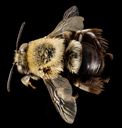
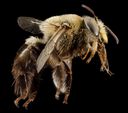
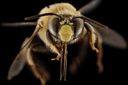
Centris lanosa is a specialized oil-collecting in the Apidae, commonly known as the wooly oil-digger. It is one of the few bee that has evolved to collect fatty oils rather than nectar from flowers, specifically from Krameria species. The bee mixes these oils with pollen to provision its larvae. It has a disjunct distribution across the southeastern and southwestern United States, with separated by more than 250 km.
Pronunciation
How to pronounce Centris lanosa: //ˈsɛn.tris ləˈnoʊ.sə//
These audio files are automatically generated. While they are not always 100% accurate, they are a good starting point.
Identification
Centris lanosa is placed in the subgenus Paracentris. It is described as 'wooly,' suggesting a notably hairy or lanose body covering. The can be distinguished from other Centris bees by its specialized association with oil-producing Krameria flowers. Males and females both visit these flowers, though only females collect oils. The has been noted to produce a distinctive buzzing sound when foraging at ground level among Krameria plants.
Images
Habitat
Occurs in dry, sandy including sand shinnery oak shrubland. Associated with riparian buffers in mixed pine-hardwood forests. The habitat is characterized by well-drained soils where plants of the Krameria can establish. Elevation and moisture regimes appear to favor drought-adapted vegetation .
Distribution
Two disjunct in the United States: southwestern population and southeastern population. Southeastern records previously limited to northern Florida; first Georgia record from Treutlen County in May 2024 extends the known range northward by more than 250 km. GBIF records indicate presence in Middle America and North America.
Seasonality
activity recorded in May and June. The May 2024 Georgia record and June observations from Oklahoma suggest spring to early summer period, coinciding with Krameria lanceolata flowering.
Diet
Specialized oil-collector. females collect fatty oils from elaiophores (modified petal structures) of Krameria lanceolata and other Krameria . These oils are mixed with pollen to form larval provisions. Unlike most bees, adults do not collect nectar as a primary resource.
Host Associations
Behavior
Females forage at ground level among prostrate Krameria plants, producing a distinctive buzz audible to observers. Oil collection involves scraping fatty secretions from the elaiophore surfaces using specialized morphological adaptations. The has been successfully captured in blue vane traps, suggesting response to visual cues. Foraging activity appears concentrated during plant bloom period.
Ecological Role
Similar Taxa
- Other Centris speciesMany Centris are also oil-collectors, but C. lanosa is distinguished by its specific association with Krameria lanceolata in its southeastern range and its disjunct distribution pattern. Subgenus Paracentris placement separates it from members of other subgenera.
More Details
Pollination Biology
Krameria flowers represent an unusual evolutionary convergence with orchids in floral , though the underlying structure differs: Krameria uses five sepals as showy 'petals' with true petals modified into elaiophores, whereas orchids have three petal-like sepals and a modified lip. This mimicry attracts oil-collecting bees without offering nectar rewards.
Conservation Notes
The 2024 Georgia record represents a significant range extension, suggesting either historical undersampling or potential range expansion. The 's specialized dependence on Krameria plants makes it vulnerable to loss affecting sand shinnery oak shrublands and similar dry sandy .