
Perdita claypolei
Cockerell, 1901
Perdita claypolei is a of mining bee in the Andrenidae, described by Cockerell in 1901. It belongs to the Perdita, which comprises small, solitary bees commonly known as miner bees. The genus Perdita includes some of the smallest bees in North America, with species ranging from approximately 2 mm to over 10 mm in length. Perdita species are typically , often associated with specific plants.
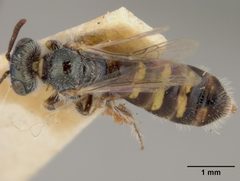
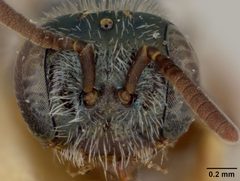
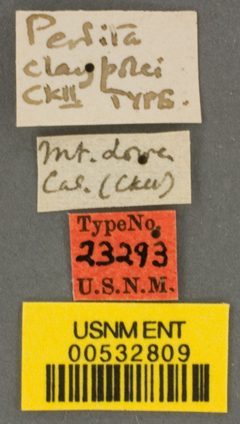
Pronunciation
How to pronounce Perdita claypolei: //pɛrˈdiːtə ˈkleɪpoʊlaɪ//
These audio files are automatically generated. While they are not always 100% accurate, they are a good starting point.
Identification
Members of Perdita can be distinguished from other Andrenidae by their small size, often metallic coloration, and relatively simple wing venation. The is characterized by reduced stigma in the forewing and typically short, sparse . -level identification within Perdita generally requires examination of microscopic characters, particularly male genitalia and female facial markings. Specific diagnostic features for P. claypolei are not documented in the provided sources.
Images
Habitat
Distribution
North America. Specific range details for P. claypolei are not documented in available sources.
Ecological Role
As with other Perdita , P. claypolei likely functions as a in its native . Members of this are typically oligolectic or polylectic pollinators, contributing to plant in their .
Similar Taxa
- Perdita minimaSmallest known (approximately 2 mm), also in Perdita, distinguished by extreme size reduction.
- Other Perdita speciesCongeneric share similar and require detailed examination of genitalia and facial characters for separation.
Sources and further reading
- BugGuide
- GBIF taxonomy match
- iNaturalist taxon
- Catalogue of Life
- Primary Type List | Entomology Research Museum
- You, Too, Can Plant a Pollinator Garden | Bug Squad
- 'Am I Even a Bee?' Identity Crisis Unfolds in This Charming Book | Bug Squad
- Researchers Develop Genome Map for Mojave Poppy Bee
- Bug Eric: World Bee Day....A Little "Bee"hind
- The best species name ever! | Beetles In The Bush