
Calliopsis andreniformis
Smith, 1853
Eastern Miner Bee
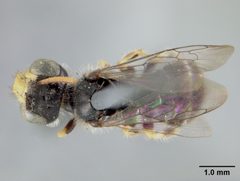
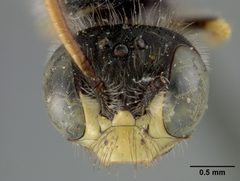
Calliopsis andreniformis, commonly known as the eastern miner , is a solitary ground-nesting bee in the Andrenidae. It is native to North America and has been documented as a of plants in the family Fabaceae. The belongs to a of small mining bees that typically nest in sandy or bare soils. Like other members of Andrenidae, females construct individual burrows and provision with pollen and nectar for their offspring.
Pronunciation
How to pronounce Calliopsis andreniformis: //ˌkæliˈɒpsɪs ænˌdrɛnəˈfɔːrmɪs//
These audio files are automatically generated. While they are not always 100% accurate, they are a good starting point.
Images
Habitat
Sandy or bare soils suitable for ground nesting; associated with prairie and grassland where Fabaceae plants occur. The requires open ground for burrow construction.
Distribution
North America. Documented occurrences include the eastern United States (Vermont) and range extends across the continent.
Diet
of Fabaceae (legume ) plants. Females collect pollen and nectar from these plants to provision nest .
Host Associations
- Fabaceae - pollen/nectar source ; females collect pollen and nectar from legume plants to provision nests
Ecological Role
, with documented specialization on Fabaceae plants. Contributes to of legume plants in prairie and grassland .
Similar Taxa
- Calliopsis zebrataCongeneric in same ; both are ground-nesting mining bees in Andrenidae, but C. zebrata occurs in sandy plains of Colorado and western regions while C. andreniformis is eastern in distribution
More Details
Nesting Biology
As a member of Andrenidae, females are solitary ground-nesters, constructing burrows in soil and creating provisioned with pollen and nectar. Males lack stingers and may aggregate near female nesting sites.