
Andrena pruni
Robertson, 1891
Cherry Mining Bee, cherry miner
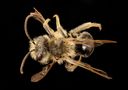
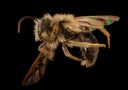
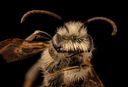
Andrena pruni is a solitary mining bee in the Andrenidae, native to North America. It is commonly known as the Cherry Mining Bee or cherry miner. Like other members of the Andrena, it nests in the ground and is an important . The specific epithet 'pruni' suggests a likely association with Prunus (cherry/plum) as a pollen or nectar source, though this relationship requires confirmation.
Pronunciation
How to pronounce Andrena pruni: /ænˈdriːnə ˈpruːnaɪ/
These audio files are automatically generated. While they are not always 100% accurate, they are a good starting point.
Images
Distribution
North America; specifically recorded from Vermont, United States.
Host Associations
- Prunus - likely pollen/nectar sourceSpecific epithet 'pruni' suggests association, but not confirmed in provided sources. Specific plant relationships for this are not documented in available literature.
Similar Taxa
- Andrena carliniBoth are North American mining bees in the same , similar in general appearance and ground-nesting . A. carlini is specifically associated with Amelanchier (serviceberry) flowers and has been documented as prey for crab spiders.
- Andrena barbilabrisBoth are ground-nesting Andrena . A. barbilabris is known as the Sandpit Mining Bee due to its preference for sandy soils, and has been suggested as a potential for parasitic flies.
More Details
Taxonomic note
Described by Robertson in 1891. The name 'pruni' derives from Latin Prunus (plum/cherry), indicating the likely original collector's observation of the on these flowers, though this does not constitute confirmed ecological documentation.
Data gaps
No published studies specifically addressing the , , or conservation status of A. pruni were found in the provided sources. Most available information is derived from taxonomic databases rather than ecological research.
Sources and further reading
- BugGuide
- Wikipedia
- GBIF taxonomy match
- iNaturalist taxon
- NCBI Taxonomy
- Catalogue of Life
- leafhoppers | Beetles In The Bush
- Not-so Solitary Bees - Buglife Blog - Buglife
- Northern Ireland, invertebrate finds in review 2023 - Buglife Blog - Buglife
- In a New Study, Spring Forest Bees Get Their Due
- Bare ground experiments to help save rare bees and wasps - Buglife Blog - Buglife
- What’s in a name….? - Buglife Blog - Buglife