Protopulvinaria pyriformis
(Cockerell, 1894)
Pyriform Scale
Protopulvinaria pyriformis, commonly known as the pyriform , is a soft scale insect in the Coccidae. It is a significant agricultural pest primarily associated with avocado, though it has been recorded on citrus and other . The exhibits parthenogenetic in most and possesses the unusual ability for a soft scale to move around as an female. It is known from multiple continents including Australia, Africa, Europe, and the Americas.
Pronunciation
How to pronounce Protopulvinaria pyriformis: /ˌproʊtəʊpʌlˈvɪnəriə paɪrɪˈfɔːrmɪs/
These audio files are automatically generated. While they are not always 100% accurate, they are a good starting point.
Identification
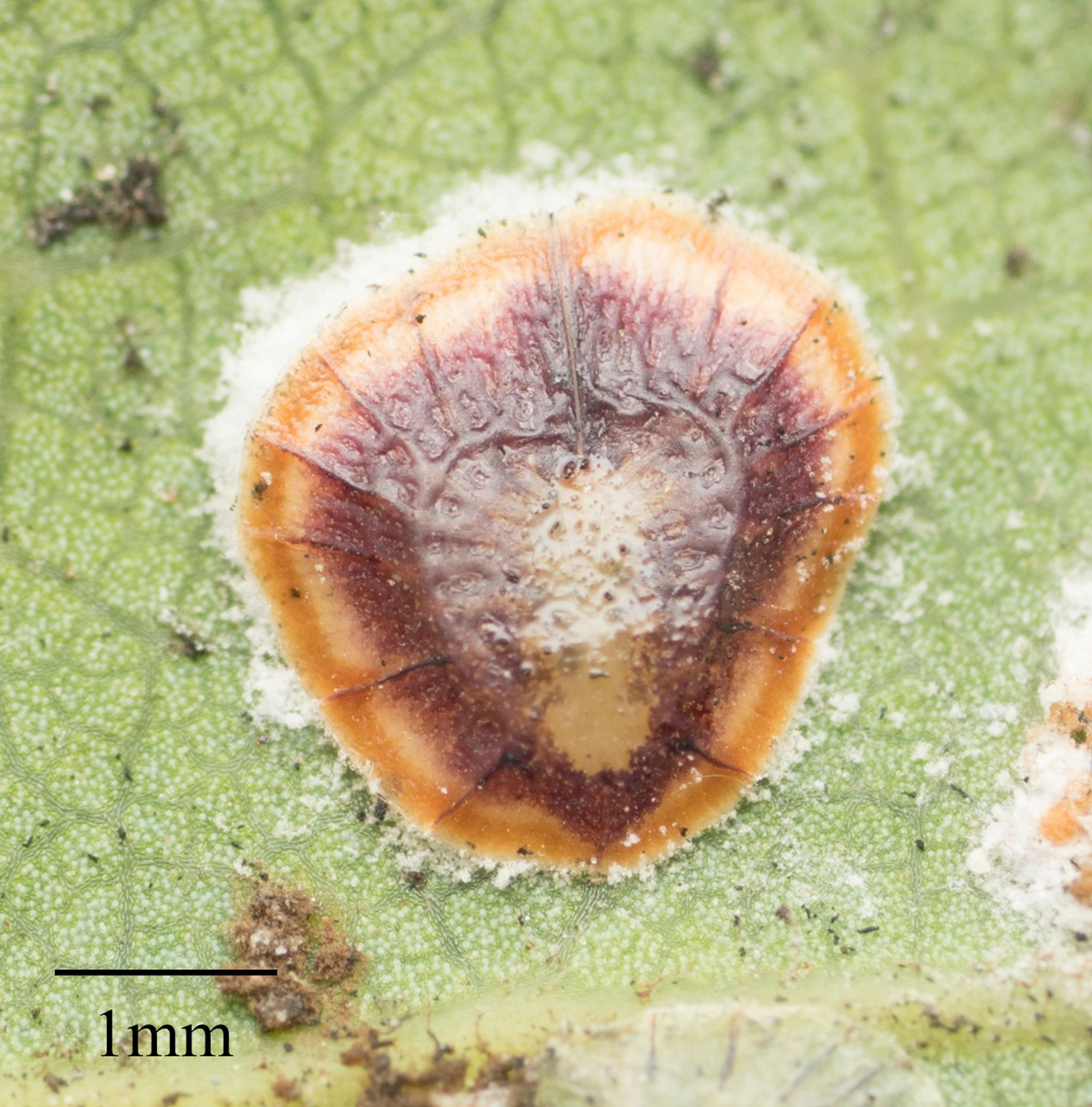
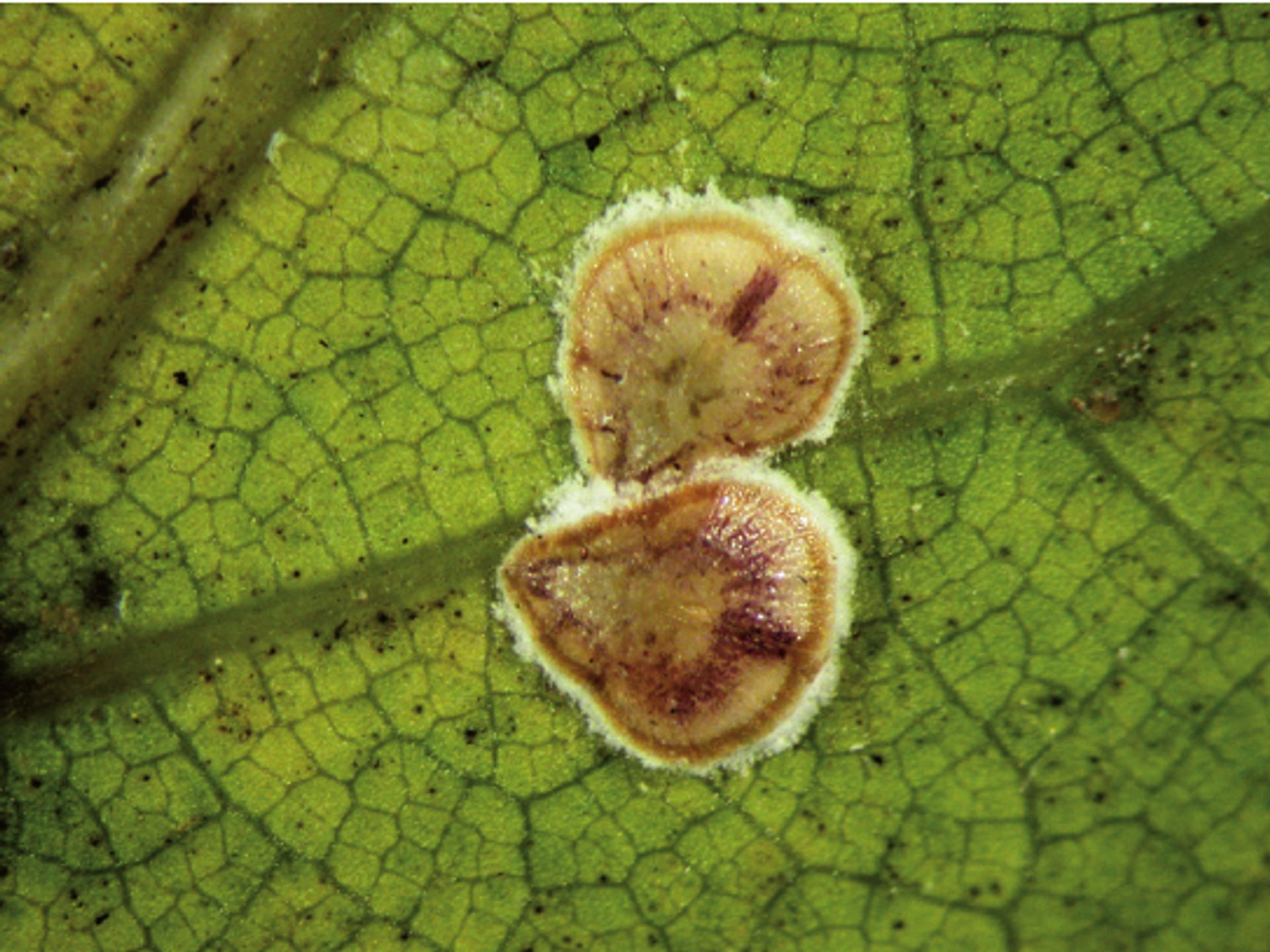
Distinguished from similar soft scales by the pear-shaped or -shaped body form, reddish-brown with radial striping, and the projecting white ovisac in mature females. The ability of females to move distinguishes it from most other Coccidae. Nymphs are pale green, flat, and oval, differing from the more rounded or convex nymphs of many related .
Images
Appearance
female pear-shaped to -shaped, approximately 3 mm in length, protected by a reddish-brown with radial stripes. Mature individuals develop a hardened scale with a fluffy white ovisac projecting slightly from underneath. Nymphs are pale green, flat, and oval. are pale yellow. Males have been observed in Florida but are not known in South Africa.
Habitat
Found on plants in subtropical and Mediterranean climates. In , occurs in avocado orchards and citrus groves. Has been observed on ornamental plants including Hedera helix and Schefflera arboricola under greenhouse conditions.
Distribution
Recorded from Australia, South Africa, Israel, Italy, France, Spain, Cuba, Florida (USA), Peru, Morocco, Greece, and the Azores (São Miguel, Terceira).
Seasonality
Two per year in South Africa and Israel. of varies seasonally, with lowest rates in cooler months (December–May or October–May) and highest rates in summer (June–September).
Diet
Feeds by sucking sap from plants. Primary hosts are avocado (Persea americana) and citrus; also recorded on Persea indica, Hedera helix, Schefflera arboricola, and laurel.
Host Associations
- Persea americana - primary major agricultural pest
- Citrus - including in Spain and Morocco
- Persea indica - first record in Madeira, Portugal
- Hedera helix - greenhouse
- Schefflera arboricola - greenhouse
- Laurus - laurel
Life Cycle
Mature female produces 200–300 stored in the ovisac until hatching. First instar nymphs () disperse from the mother. Developmental timing: approximately 10 days to second instar, 17 additional days to third instar, 25 days to adult, 28 days as immature adult, then 45 days as mature egg-producing adult. is primarily parthenogenetic in most .
Behavior
females are capable of movement, unlike most soft scale insects. First instar nymphs actively disperse as . Exhibits seasonal variation in immune defense, with increased of during warmer periods.
Ecological Role
Acts as a for multiple including Metaphycus stanleyi and Metaphycus helvolus (Encyrtidae), and Aphytis sp. (Aphelinidae). Associated with the Chilocorus bipustulatus (Coccinellidae). Heavy produce copious honeydew that supports growth, potentially reducing in host plants.
Human Relevance
Significant agricultural pest of avocado, described as the worst insect pest of avocado in Peru. Causes damage through sap feeding and honeydew secretion that promotes , reducing , weakening plants, causing leaf drop, shoot dieback, and reducing fruit size and yield. Certain avocado cultivars are more susceptible than others. Subject to efforts using .
Similar Taxa
- Other Protopulvinaria speciesshare -level traits; distinguished by body shape, coloration, and ovisac structure
- Saissetia coffeaesimilar soft on avocado; differs in body shape and lack of radial scale striping
More Details
Reproductive biology
Males are absent or rare in many ; South African populations reproduce exclusively by , while males have been observed in Florida.
Immune defense
rates of correlate with ambient temperature, potentially explaining seasonal despite efforts.
Sources and further reading
- BugGuide
- Wikipedia
- GBIF taxonomy match
- iNaturalist taxon
- NCBI Taxonomy
- Catalogue of Life
- New hosts for the pyriform scale Protopulvinaria pyriformis (Cockerell) (Hemiptera: Coccidae) in Greece
- Pyriform scale, Protopulvinaria pyriformis (Cockerell, 1894) (Hemiptera: Coccidae), infesting citrus trees in Morocco
- First records of Aulacaspis tubercularis, Icerya seychellarum and Protopulvinaria pyriformis on Persea indica
- Parasitoid community of Protopulvinaria pyriformis (Hemiptera: Coccidae) on laurel: Influence of host size, seasonal trend and aggregation on its main parasitoid
- Novel defenses of Protopulvinaria pyriformis (Hemiptera: Coccidea) against its major parasitoid Metaphycus helvolus (Hymenoptera: Encyrtidae): Implications for biological control of soft scales
- Seasonal variations in the encapsulation of eggs of the encyrtid parasitoid Metaphycus stanleyi by the pyriform scale, Protopulvinaria pyriformis