
Stegophylla
Oestlund, 1923
Woolly Oak Aphids
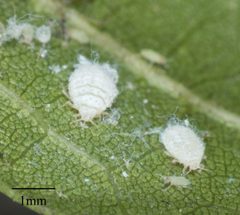
Stegophylla is a of aphids in the Phyllaphidinae, first described by Oscar W. Oestlund in 1923. Members are commonly known as woolly oak aphids due to their association with oak plants and the waxy secretions they produce. The genus contains seven recognized , including S. quercifoliae and S. quercicola, both linked to Quercus species.
Pronunciation
How to pronounce Stegophylla: //ˌstɛɡoʊˈfɪlə//
These audio files are automatically generated. While they are not always 100% accurate, they are a good starting point.
Identification
Stegophylla can be distinguished from other Phyllaphidinae by their association with oak (Quercus) and the dense woolly wax filaments produced by colonies. Within the , species differentiation requires examination of morphological characters such as rostrum length and abdominal patterns.
Images
Habitat
Associated with oak forests and woodlands where Quercus occur. Colonies form on leaves and twigs of oak trees.
Distribution
Native to North America, with records from the United States and Mexico. Distribution follows that of oak .
Diet
Phloem-feeding on oak (Quercus ).
Host Associations
- Quercus - primary Obligate association; all known feed on oak
Life Cycle
involves parthenogenetic during spring and summer, with potential for and -laying in autumn. Specific cycle details for Stegophylla are not well documented.
Behavior
Colonies produce dense woolly wax secretions that cover the body and surrounding plant tissue. This wax likely provides protection from and desiccation.
Ecological Role
Phloem feeders that may cause leaf distortion or honeydew production on oak trees. Serve as prey for and in forest .
Human Relevance
Minor forestry pest on ornamental and native oaks. Heavy may cause aesthetic damage through growth on honeydew deposits.
Similar Taxa
- PhyllaphisAlso in Phyllaphidinae and produces woolly wax, but associated with birch (Betula) rather than oak
- SchizolachnusAnother woolly aphid on conifers, distinguished by association with Pinaceae
More Details
Species Diversity
Seven are currently recognized: S. brevirostris, S. davisi, S. essigi, S. mugnozae, S. quercicola, S. quercifoliae, and S. quercina. Two species names reflect their oak specificity (quercicola, quercifoliae, quercina).