
Ericaphis
Börner, 1939
blueberry aphids
Species Guides
1Ericaphis is a of aphids in the Aphididae, established by Börner in 1939. The genus includes associated with Ericaceae, particularly Vaccinium species. Ericaphis fimbriata, the type species, is a significant pest of cultivated highbush blueberry (Vaccinium corymbosum) in the Pacific Northwest of North America. Species in this genus exhibit typical with both aperous and morphs, and are known of plant viruses.
Pronunciation
How to pronounce Ericaphis: //ˌɛrɪˈkæfɪs//
These audio files are automatically generated. While they are not always 100% accurate, they are a good starting point.
Identification
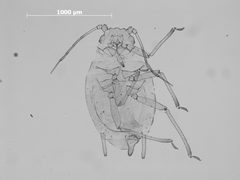
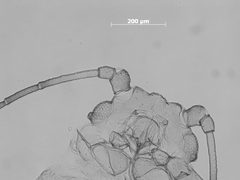
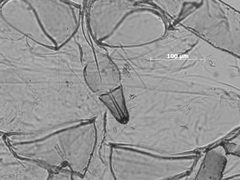
Ericaphis are small, soft-bodied aphids. Ericaphis fimbriata can be distinguished from other blueberry-associated aphids by its specific association with Vaccinium corymbosum and its role as the species in commercial blueberry fields in southwestern British Columbia, Washington, and northeastern Oregon. Accurate species-level identification within the requires examination of morphological characters such as siphunculi, cauda, and antennal ; identification keys to species are available in aphid taxonomic literature.
Images
Habitat
Associated with Ericaceae, particularly Vaccinium . Ericaphis fimbriata occurs in commercial highbush blueberry (Vaccinium corymbosum) fields, where it colonizes both young and mature leaves. The species overwinters as on blueberry .
Distribution
Records from Denmark, Norway, and Sweden (GBIF). Ericaphis fimbriata is documented from southwestern British Columbia, Washington, and northeastern Oregon in North America.
Seasonality
Ericaphis fimbriata overwinters as and emerges during late February and March at bud break. Fundatrices appear in April, producing virginoparous offspring. Peak densities occur in late June or early July. production declines from May through August. Sexual morphs appear in late September and October.
Diet
Phloem feeder on Ericaceae, specifically Vaccinium corymbosum (highbush blueberry).
Host Associations
- Vaccinium corymbosum - primary highbush blueberry; commercial crop for Ericaphis fimbriata
Life Cycle
Holocyclic with . Ericaphis fimbriata: eggs hatch in late February to March; fundatrices () appear in April and produce both and apterous virginoparae; sexual morphs produced in late September to October. Development threshold is 4.1°C. Development time and vary seasonally and with leaf age: 157.7 on young spring leaves versus 312.4 degree-days on mature summer leaves.
Behavior
Strong seasonal variation in development rate and . Preference for young leaves in spring, with growth maximized during this period. Production of virginoparae increases with on flower clusters.
Ecological Role
Herbivore on Vaccinium . Ericaphis fimbriata is a significant agricultural pest and the primary of blueberry scorch virus (BlScV) in commercial blueberry production. for multiple aphidiine species including Aphidius ericaphidis.
Human Relevance
Ericaphis fimbriata is an economically important pest of commercial highbush blueberry. It is the primary of blueberry scorch virus (BlScV), a significant of blueberry crops. Management recommendations emphasize control before bloom and production to reduce virus transmission risk. Binomial sampling methods have been developed for monitoring in commercial fields.
Similar Taxa
- other Aphididae on VacciniumEricaphis fimbriata is distinguished from other blueberry aphids by being the in commercial highbush blueberry fields in the Pacific Northwest and by specific morphological characters; can aid in identification
Sources and further reading
- BugGuide
- GBIF taxonomy match
- iNaturalist taxon
- NCBI Taxonomy
- Catalogue of Life
- Life-history parameters and population dynamics of Ericaphis fimbriata (Hemiptera: Aphididae) on blueberry, Vaccinium corymbosum
- A binomial sampling method for estimating the density of blueberry aphid, Ericaphis fimbriata (Hemiptera: Aphididae), in commercial highbush blueberry
- A new Aphidius Nees (Hymenoptera, Braconidae, Aphidiinae) of Ericaphis fimbriata (Richards) (Hemiptera, Aphididae) and key to parasitoids of blueberry aphid in the Pacific Northwest
- Ecology and management of Ericaphis fimbriata (Hemiptera: Aphididae) in relation to the potential for spread of Blueberry scorch virus