
Ceruraphis
Börner, 1926
Viburnum-Sedge Aphids
Species Guides
2- Ceruraphis eriophori(Wayfaring Tree-sedge Aphid)
- Ceruraphis viburnicola(Snowball Aphid)
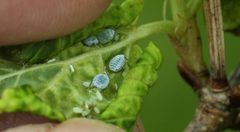
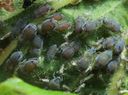
Ceruraphis is a of aphids in the Aphididae, established by Börner in 1926. The genus includes that exhibit alternation between primary hosts (Viburnum species) and secondary hosts in wet . Ceruraphis eriophori, the type species, induces leaf curling on Viburnum hosts and has been recorded from Europe and North America.

Pronunciation
How to pronounce Ceruraphis: //ˌsɛrʊˈræfɪs//
These audio files are automatically generated. While they are not always 100% accurate, they are a good starting point.
Images
Habitat
Associated with curled leaves of Viburnum (primary ) in spring and autumn; secondary include wetlands supporting sedges, rushes, and cattails.
Distribution
Europe (including Denmark, Norway, Sweden); North America (New Brunswick, Canada; Colorado, USA).
Seasonality
Active in spring and autumn on primary Viburnum ; host alternation implies presence on secondary hosts during intervening periods.
Diet
Phloem sap from plants.
Host Associations
- Viburnum lantana - primary curled leaves
- Viburnum opulus - primary curled leaves
- Viburnum opulus var. roseum - primary synonymized as V. opulus var. sterile in some records
- Carex spp. - secondary Europe only
- Eriophorum spp. - secondary Europe only
- Luzula spp. - secondary Europe only
- Typha spp. - secondary Europe only
- Cyperus virens - secondary only North American record
Life Cycle
Heteroecious with alternation: primary hosts are Viburnum where colonies induce leaf curling; secondary hosts are sedges, rushes, and related wetland plants. is ; viviparous females present.
Behavior
Induces leaf curling on primary Viburnum .
Ecological Role
Herbivore; gall-forming that manipulates plant tissue to create sheltered feeding sites.
Similar Taxa
- NeoceruraphisFormerly congeneric; separated based on morphological and differences. Neoceruraphis viburnicola shares Viburnum primary but has unrecorded secondary hosts and differs in morphological features of the female.