
Carolinaia rhois
Monell, 1879
Sumac-Grass Aphid
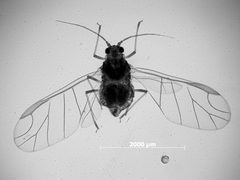
Carolinaia rhois is an in the Aphididae, commonly known as the Sumac-Grass Aphid. The species is associated with sumac (Rhus) as a primary and grasses as secondary hosts, following the typical of many aphids. Taxonomic records indicate some historical confusion regarding authorship, with both Monell (1879) and Tissot (1928) cited in different sources. The species has been documented through limited but verified observations, primarily in North America.
Pronunciation
How to pronounce Carolinaia rhois: //ˌkærəˈlaɪniə ˈroʊɪs//
These audio files are automatically generated. While they are not always 100% accurate, they are a good starting point.
Identification
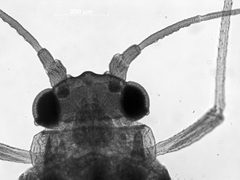
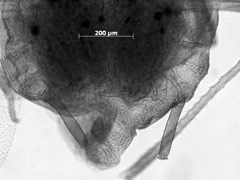
Identification to requires examination of morphological features including the shape and length of siphunculi, cauda structure, and antennal segment ratios. The species can be distinguished from other Carolinaia species by association with sumac (Rhus) and the specific combination of morphological characters described in Monell's original 1879 description. Confirmation typically requires slide-mounted specimens and comparison with type material or authoritative keys. Differential from Carolinaia tissoti and other depends on subtle differences in siphuncular and caudal .
Images
Habitat
Associated with sumac (Rhus ) as primary , occurring on leaves and stems. Secondary host colonies occur on various grasses (Poaceae). include open woodlands, forest edges, meadows, and anthropogenic environments where sumac and grasses co-occur. Specific microhabitat preferences on host plants are not documented.
Distribution
North America; documented from the eastern and central United States based on collection records and observations. Specific range boundaries are poorly defined due to limited survey effort and taxonomic confusion with related .
Seasonality
Activity follows the typical heteroecious pattern of temperate aphids: hatch on sumac in spring, several on sumac, to grasses in early summer, return migration to sumac in autumn, and with egg-laying before winter. Exact timing varies with latitude and local climate.
Diet
Phloem feeder; extracts sap from vascular tissues of plants. Primary host: sumac (Rhus ). Secondary hosts: various grasses (Poaceae). Specific grass host range is not fully documented.
Host Associations
- Rhus - primary Sumac ; site of and stage.
- Poaceae - secondary Various grass ; site of parthenogenetic during summer months.
Life Cycle
Heteroecious with alternation between primary woody (sumac, Rhus) and secondary herbaceous hosts (grasses, Poaceae). as on sumac. In spring, fundatrices hatch and reproduce parthenogenetically on sumac. migrants develop and disperse to grasses in early summer. Multiple parthenogenetic on grasses. In autumn, alate sexuparae return to sumac, where sexual morphs (oviparae and males) are produced, mate, and lay overwintering eggs. Anholocyclic may persist on grasses in mild climates or in protected environments.
Behavior
Forms colonies on undersides of leaves and on young stems. Exhibits typical defensive including kicking with hind legs and dropping from plant when disturbed. production from cornicles when threatened by . Colony foundation on grasses occurs through from sumac. Specific behavioral studies for this are not published.
Ecological Role
Herbivore that may cause leaf curling and distortion on sumac through feeding damage. Serves as prey for including lady beetles (Coccinellidae), lacewings (Chrysopidae), and (Braconidae: Aphidiinae). May plant viruses between grass , though specific vector competence is not documented. Honeydew production supports growth and associations.
Human Relevance
Minor agricultural significance; potential pest of ornamental sumac and possibly turf grasses, though economic impact is not documented. Of greater interest to taxonomists and ecologists studying -alternating aphid . Not known to transmit human .
Similar Taxa
- Carolinaia tissotiHistorically confused with C. rhois; distinguished by subtle differences in siphuncular and caudal and associations. Some sources treat these as synonyms, others as distinct .
- Carolinaia caricisShares grass and similar ; distinguished by primary host association (Carex vs. Rhus) and specific antennal and siphuncular characters.
- Illinoia spp.Similar general appearance and grass use; distinguished by differences in siphuncular shape, antennal development, and host range.
Misconceptions
Authorship confusion: Some sources cite Tissot (1928) as authority, while authoritative sources including NCBI and GBIF cite Monell (1879). The Tissot name appears to represent a later description or redescription. This taxonomic ambiguity has led to duplicate or conflicting records in databases.
More Details
Taxonomic History
The was described by Monell in 1879, but Tissot (1928) also described what appears to be the same species, leading to dual authorship citations in some literature. The name Carolinaia rhois (Monell, 1879) is accepted in current databases (GBIF, NCBI), though Catalogue of Life lists Tissot, 1928 as the authority with status 'ambiguous synonym'.
Host Verification
associations are inferred from -level patterns in Carolinaia and limited collection records. The primary host sumac and secondary host grasses follow the pattern established for related , but direct host transfer experiments have not been published.