
Hysteroneura
Davis, 1919
Plum-grass Aphids, rusty plum aphid
Species Guides
1- Hysteroneura setariae(Rusty Plum Aphid)
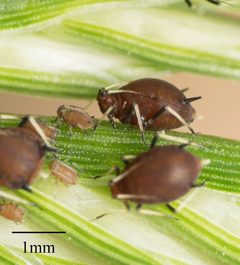
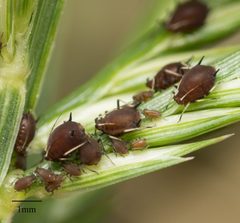
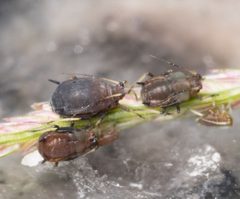
Hysteroneura is a of aphids in the Aphididae containing a single , Hysteroneura setariae (the rusty plum aphid). The genus was established by Davis in 1919. The sole species is a phloem-feeding hemipteran with a broad global distribution spanning multiple continents.
Pronunciation
How to pronounce Hysteroneura: /ˌhɪstəroʊˈnjʊərə/
These audio files are automatically generated. While they are not always 100% accurate, they are a good starting point.
Images
Habitat
Associated with grasses and fruit trees; has been observed in urban parks on ornamental grasses and in agricultural settings on cereal crops.
Distribution
Documented from Asia (Hong Kong, India, Malaysia, Philippines, Vietnam, Japan, Yemen), Africa (Cameroon, Gambia, Ghana, Nigeria, Portuguese Guinea, Sierra Leone, South Africa, Namibia), Australasia and Pacific Islands (Australia, Easter Island, Fiji, Hawaii, Papua New Guinea, Solomon Islands), North America (Canada, United States), Central America and West Indies (Honduras), and South America (Argentina, Brazil, Chile, Colombia, Guyana, Suriname, Venezuela).
Seasonality
Observed in autumn in central Japan; activity patterns in other regions not specified.
Diet
Phloem sap from plants.
Host Associations
- Muhlenbergia capillaris - Pink muhly grass; ornamental grass supporting high- in Japan
- Sorghum - Recorded feeding on this crop in the United States
- Millets - Recorded feeding on other millet in the United States
- Rice - Recorded feeding on this crop in the United States
- Plum - Fruit tree ; referenced in
- Peach - Fruit tree
Behavior
Forms extremely dense colonies; has been observed at densities of approximately 9000 individuals per square meter on Muhlenbergia capillaris in Japan.
Ecological Role
Serves as prey for natural enemies including the ladybird beetle Coccinella septempunctata. The grass Muhlenbergia capillaris has been proposed as a banker plant system to support beneficial in agricultural and urban settings.
Human Relevance
Agricultural pest on sorghum, millets, and rice in the United States; not considered a pest in Japan despite high densities. Potential utility in systems as a prey to support beneficial .
More Details
Taxonomic status
; Hysteroneura setariae is the sole described . Synonymized as Carolinaia setariae in some literature.
iNaturalist observations
557 observations recorded for the , indicating moderate citizen science documentation.
Sources and further reading
- BugGuide
- Wikipedia
- GBIF taxonomy match
- iNaturalist taxon
- NCBI Taxonomy
- Catalogue of Life
- Hysteroneura setariae . [Distribution map].
- Emergence of the aphid Hysteroneura setariae (Thomas, 1878) and ladybird predators Coccinella septempunctata L., 1758 (Coleoptera: Coccinellidae) on the grass Muhlenbergia capillaris (Lamark) Trinius in central Japan