
Aphis asclepiadis
Fitch, 1851
Dogwood-Milkweed Aphid
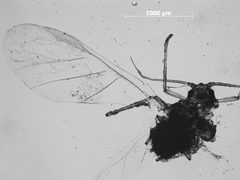
Aphis asclepiadis is an that colonizes the flowering stalks of its plant Ligusticum porteri. The species engages in a protection mutualism with ants, where ants tend colonies in exchange for honeydew. Research indicates that aphid colony growth depends on both host plant quality and presence—without ant tending, host plant water stress effects on colony growth are not detectable. The species produces honeydew with variable content depending on host plant quality, which influences ant and natural enemy abundance.


Pronunciation
How to pronounce Aphis asclepiadis: /ˈæfɪs æsˌklɛpiˈædɪs/
These audio files are automatically generated. While they are not always 100% accurate, they are a good starting point.
Images
Habitat
Flowering stalks of plant Ligusticum porteri; occurs in systems with seasonal snow cover where early snowmelt creates water-stressed host plants
Distribution
Colorado, USA (documented at Colorado College study site)
Diet
Phloem-feeding on plant Ligusticum porteri; produces honeydew enriched in when feeding on high-quality, water-unstressed host plants
Host Associations
Life Cycle
Colony growth occurs on plant flowering stalks; colony establishment and expansion tied to host plant and water status
Behavior
Forms protection mutualism with ants; tending modifies colony response to plant quality; produces honeydew with content that varies with host plant water stress
Ecological Role
Herbivore; participates in multitrophic interactions involving bottom-up effects (plant water stress, ) and top-down effects ( mutualism, natural enemies); honeydew production influences local ant and natural enemy abundance
More Details
Climate Change Effects
Early snowmelt reduces abundance by creating water-stressed plants, potentially exacerbated by natural enemies and costs of attendance
Sources and further reading
- BugGuide
- GBIF taxonomy match
- iNaturalist taxon
- NCBI Taxonomy
- Catalogue of Life
- Incredible Work, and Timely, on 22 Species of Hornets | Bug Squad
- It Takes a Village: Our Continued Efforts to Manage Invasive Species in the U.S.
- Orange and Black II: Milkweed leaf beetle, Labidomera clivicollis; Oleander aphid, Aphis nerii; Milkweed Bug, Oncopeltus fasciatus; Monarch, Danaus plexippus — Bug of the Week
- Orange and Black Bugs- Milkweed leaf beetle, Labidomera clivicollis; Oleander aphid, Aphis nerii; Milkweed Bug - Oncopeltus fasciatus; Monarch butterfly, Danaus plexippus — Bug of the Week
- Got Spotted Lanternfly Eggs? Send 'Em Through the Wood Chipper
- New Research Advances Efforts to Predict Rangeland Grasshopper Outbreaks
- Early snowmelt reduces aphid abundance (Aphis asclepiadis) by creating water-stressed host plants (Ligusticum porteri) and altering interactions with ants