
Brochymena carolinensis
Westwood, 1837
Carolina rough stink bug
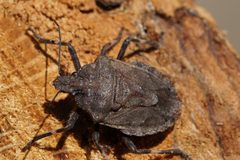
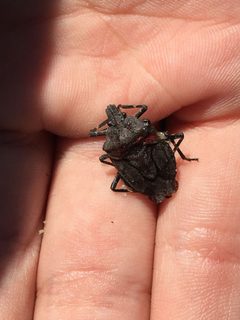
Brochymena carolinensis is a native North American in the Pentatomidae, belonging to the Brochymena, commonly known as rough stink bugs. Like other members of its genus, it exhibits cryptic coloration resembling lichen-mottled bark, providing effective camouflage against tree trunks. The is not considered an agricultural or household pest.
Pronunciation
How to pronounce Brochymena carolinensis: //brɒkˈhɪmɛnə kæˌroʊlɪˈnɛnsɪs//
These audio files are automatically generated. While they are not always 100% accurate, they are a good starting point.
Identification
Distinguished from the brown marmorated stink bug (Halyomorpha halys) by: (1) without white bands on last two segments, (2) presence of fine teeth along leading edge of pronotum, and (3) rough, bark-like texture versus smoother appearance. -level identification within Brochymena requires microscopic examination of dead specimens and is considered difficult to impossible in the field.
Images
Habitat
Associated with trees and woody vegetation. overwinter under loose bark or in other sheltered outdoor locations. Not known to seek indoor shelter for hibernation in significant numbers.
Distribution
North America. Specific range within continent not documented separately from -level distribution.
Seasonality
active on warm, sunny winter days. Overwinters in adult stage. One annually in temperate climates.
Life Cycle
laid in small clusters on twigs of trees. Nymphs progress through four instars before reaching adulthood. Development from egg to is lengthy, resulting in (one per year) in temperate regions.
Behavior
Overwinters in beneath loose bark or in other snug outdoor shelters. fly well and may alight on contrasting surfaces such as fences or sidewalks. Does not typically enter human structures for .
Ecological Role
Suspected to feed on sap of trees and shrubs. Possibly opportunistically predatory or scavenging on other insects, though this remains unconfirmed. Serves as prey for various including sand wasps, birds, and fence lizards. parasitized by platygastrid including Trissolcus brochymenae.
Human Relevance
Not a pest . Does not invade homes in large numbers. Distinguishable from the problematic brown marmorated stink bug by morphological features.
Similar Taxa
- Halyomorpha halysBrown marmorated stink bug is pest with banded , smooth pronotum without teeth, and tendency to aggregate indoors; B. carolinensis has unbanded antennae, toothed pronotum, rough texture, and remains outdoors
- Other Brochymena speciesApproximately 21-23 in north of Mexico; species-level identification requires microscopic examination and is often impossible in field
Misconceptions
May be confused with brown marmorated stink bug due to general shield bug shape, but is harmless native that does not invade structures.
More Details
Taxonomic note
-level identification within Brochymena is notoriously difficult and typically requires examination of dead specimens under microscope. Field identification to species is generally not reliable.