
Apoecilus
Stål, 1870
Species Guides
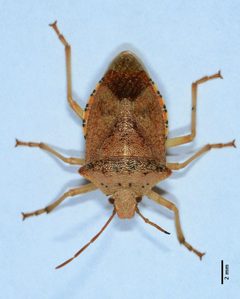
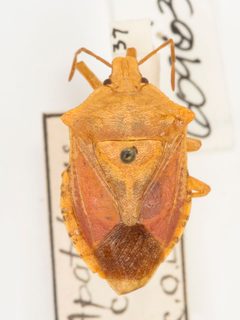
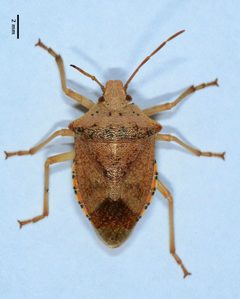
3Apoecilus is a of stink bugs in the Pentatomidae, order Hemiptera. These true bugs are characterized by their shield-shaped bodies, typical of pentatomids. The genus was established by Stål in 1870 and has been documented through over 2,000 observations on iNaturalist, indicating moderate public awareness and detectability. within this genus are found in the Western Hemisphere.
Pronunciation
How to pronounce Apoecilus: /əˈpoʊ.sɪ.ləs/
These audio files are automatically generated. While they are not always 100% accurate, they are a good starting point.
Identification
Members of Apoecilus can be distinguished from other pentatomid by genitalic characters, particularly the structure of the male parameres and female genital plates. The genus lacks the distinctive spine or on the abdominal venter found in some related genera. -level identification requires examination of these genitalic structures and often subtle coloration patterns.
Images
Distribution
of Apoecilus are distributed in the Western Hemisphere, with records from North and South America. Specific range boundaries for the as a whole are not comprehensively documented.
Ecological Role
As phytophagous pentatomids, members of this likely function as herbivores feeding on plant vascular tissues, with potential roles as minor agricultural pests or plant feeders depending on .
Similar Taxa
- MormideaBoth are pentatomine with similar general body form; Apoecilus is distinguished by genitalic structure and lack of abdominal projections.
- EuschistusAnother common pentatomid with shield-shaped body; Apoecilus generally lack the prominent punctation patterns and specific color markings characteristic of many Euschistus species.
More Details
Taxonomic history
The name Apoecilus has been subject to confusion in literature. The Catalogue of Life entry for 'Dasybasis apoecilus' represents a different entirely—a horse fly (Diptera: Tabanidae) based on Schiner's 1868 description, which is unrelated to the pentatomid Apoecilus Stål, 1870. This highlights the importance of verifying authorship and higher classification when researching this genus.
Observation data
The has accumulated over 2,200 observations on iNaturalist, suggesting it is moderately well-represented in citizen science databases, though specific -level identification rates are unknown.