
Apoecilus bracteatus
(Fitch, 1856)
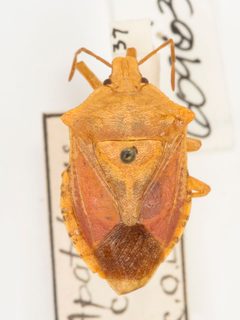
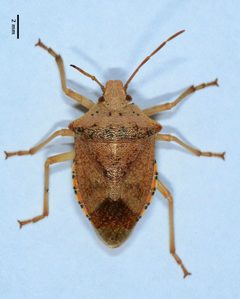
Apoecilus bracteatus is a of true in the Pentatomidae (stink bugs), described by Fitch in 1856. It belongs to the Apoecilus, a small Nearctic genus of predatory stink bugs. The species occurs in North America, with records from Canada and the United States excluding the Beringian region. As a member of the Asopinae, it is likely predatory, though specific ecological details remain poorly documented.
Pronunciation
How to pronounce Apoecilus bracteatus: /ˌæpoʊˈɛsɪləs brækˈtiːətəs/
These audio files are automatically generated. While they are not always 100% accurate, they are a good starting point.
Identification
Members of Apoecilus can be distinguished from other Pentatomidae by their elongated, somewhat cylindrical body form and the structure of the scutellum. Apoecilus bracteatus specifically may be separated from the only other in the , A. cynicus, by differences in body proportions and possibly coloration, though precise diagnostic features require examination of specimens. The genus is characterized by a relatively long and distinct antennal segmentation.
Images
Distribution
Nearctic region, recorded from Canada and the United States, excluding the Beringian region. Specific state and provincial records are limited but include parts of eastern and central North America.
Similar Taxa
- Apoecilus cynicusThe only other in the Apoecilus; differs in body proportions and geographic distribution, with A. cynicus having a more western range.
- Other Asopinae genera (e.g., Podisus, Perillus)Similar predatory habits and general body plan, but Apoecilus is distinguished by its more elongate body and distinct structure.
More Details
Taxonomic note
The Apoecilus contains only two : A. bracteatus and A. cynicus. Both are relatively poorly studied compared to more common predatory stink bugs such as Podisus maculiventris.