
Alcaeorrhynchus grandis
(Dallas, 1851)
Giant Strong-nosed Stink Bug
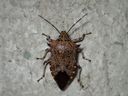
Alcaeorrhynchus grandis is a large reaching approximately 20 mm in length. It is a member of the Asopinae within Pentatomidae, a group characterized by predatory rather than herbivorous habits. The has been studied as a potential agent for lepidopteran pests in agricultural systems, particularly in palm oil plantations in the Brazilian Amazon. Its stages have been documented for field identification purposes.


Pronunciation
How to pronounce Alcaeorrhynchus grandis: /ˌælkɪəˈrɪŋkəs ˈɡrændɪs/
These audio files are automatically generated. While they are not always 100% accurate, they are a good starting point.
Images
Habitat
Occurs in several row crops and agricultural systems. Specifically documented in oil palm (dendê) plantations in the Amazon region of Brazil. The is found in the North (Norte) region of Brazil, an important palm oil production area.
Distribution
Brazil (including states of Amazonas, Espírito Santo, Maranhão, Minas Gerais, Mato Grosso, Piauí, Paraná, Rio Grande do Sul, Santa Catarina, and São Paulo), Colombia, Mexico, southern United States, Galápagos Islands, and Caribbean. Present in Middle America and North America broadly.
Diet
Predatory, feeding on other insects. Documented prey includes lepidopterous larvae, specifically the defoliating caterpillar Opsiphanes invirae in palm oil . In laboratory studies, has been observed consuming one caterpillar per individual per day using Anticarsia gemmatalis as prey.
Host Associations
- Opsiphanes invirae - preyNatural prey in palm oil plantations, a defoliating caterpillar pest
- Anticarsia gemmatalis - preyLaboratory prey used for biological studies and mass rearing attempts
Life Cycle
-to- development period has been observed with 18% viability in laboratory conditions. High mortality occurs during the second nymphal instar. Egg clutch viability is 29%. stages have been illustrated for field identification.
Behavior
Predatory includes following trails created by prey. In laboratory studies, consumes approximately one caterpillar per individual per day.
Ecological Role
Functions as a natural enemy and agent in agroecosystems. Potential for programs targeting lepidopteran defoliators in palm oil .
Human Relevance
Evaluated as a agent for the pest caterpillar Opsiphanes invirae in palm oil (dendê) production in the Brazilian Amazon. Mass rearing potential has been studied despite low viability rates, with research needed on cost-benefit analysis and alternative for rearing.
Similar Taxa
- Other PentatomidaeDistinguished from herbivorous stink bugs by predatory habits and membership in Asopinae; specific diagnostic features not provided in available sources
More Details
Mass Rearing Challenges
Laboratory studies indicate potential for large- rearing, but with significant biological constraints: 18% -to- viability and 29% egg clutch viability, with high mortality specifically in the second nymphal instar. Current rearing methods rely on artificial diet-fed prey (Anticarsia gemmatalis), requiring research on cost-effectiveness and alternative .
Taxonomic Authority
Originally described as Canthecona grandis by Dallas in 1851, later transferred to Alcaeorrhynchus.
Sources and further reading
- BugGuide
- Wikipedia
- GBIF taxonomy match
- iNaturalist taxon
- NCBI Taxonomy
- Guest Blog Post: Researchers split the birdcatcher trees (genus Pisonia) into three | Blog
- Bug Eric: Wasp Wednesday: Western Cicada Killer
- Nomenclatural changes in Phymatodes | Beetles In The Bush
- Predatory Stink Bug, Alcaeorrhynchus grandis (Dallas)
- Predatory Stink Bug, Alcaeorrhynchus grandis (Dallas) (Hemiptera: Pentatomidae)
- Opções de controle biológico de Opsiphanes invirae (Hübner, 1818) (Lepidoptera: Nymphalidae) em dendê, na região Amazônica, com o predador Alcaeorrhynchus grandis (Dallas, 1851) (Hemiptera: Pentatomidae) e com o parasitoide Trichogramma spp. (Hymenoptera: Trichogrammatidae)