
Alcaeorrhynchus
Bergroth, 1891
Species Guides
1- Alcaeorrhynchus grandis(Giant Strong-nosed Stink Bug)
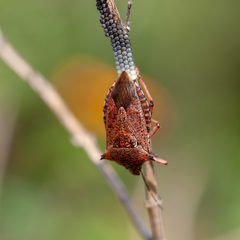
Alcaeorrhynchus is a of predatory stink bugs in the Pentatomidae. The genus includes Alcaeorrhynchus grandis, commonly called the giant strong-nosed stink bug, which reaches 20 mm in length. in this genus are known to prey on lepidopterous larvae and have been studied for applications in agricultural systems. They occur in row crops and have been evaluated as natural enemies of defoliating caterpillar pests.


Pronunciation
How to pronounce Alcaeorrhynchus: /ælˌsiːəˈrɪŋkəs/
These audio files are automatically generated. While they are not always 100% accurate, they are a good starting point.
Images
Habitat
Row crops; oil palm (dendê) plantations in the Amazon region of Brazil.
Distribution
Brazil, Colombia, Mexico, and the southern United States.
Diet
Lepidopterous larvae. Alcaeorrhynchus grandis has been observed consuming one caterpillar per individual per day under laboratory conditions using Anticarsia gemmatalis as prey.
Host Associations
- Opsiphanes invirae (Lepidoptera: Nymphalidae) - natural prey, target pest for defoliating pest of oil palm
- Anticarsia gemmatalis (Lepidoptera: Erebidae) - laboratory rearing used for mass rearing studies on artificial diet
Life Cycle
For Alcaeorrhynchus grandis: -to- period showed 18% viability with high mortality at the second nymphal instar; egg mass viability was 29%.
Behavior
Predatory. Alcaeorrhynchus grandis has been observed following trails created by prey.
Ecological Role
in agroecosystems; agent for defoliating caterpillar pests, particularly in oil palm .
Human Relevance
Evaluated for of agricultural pests, specifically Opsiphanes invirae in oil palm production in Brazil. Mass rearing potential has been investigated, though cost-benefit ratios require further study due to reliance on artificial diet and low viability rates.
More Details
Taxonomic note
The was established by Bergroth in 1891. Alcaeorrhynchus grandis (Dallas, 1851) is the best-known and serves as the primary reference for genus-level characteristics in available literature.
Research limitations
Most detailed biological data derive from laboratory studies using artificial diet-reared prey rather than natural field conditions. Field efficacy and natural range remain incompletely documented.
Sources and further reading
- BugGuide
- Wikipedia
- GBIF taxonomy match
- iNaturalist taxon
- NCBI Taxonomy
- Predatory Stink Bug, Alcaeorrhynchus grandis (Dallas)
- Predatory Stink Bug, Alcaeorrhynchus grandis (Dallas) (Hemiptera: Pentatomidae)
- Opções de controle biológico de Opsiphanes invirae (Hübner, 1818) (Lepidoptera: Nymphalidae) em dendê, na região Amazônica, com o predador Alcaeorrhynchus grandis (Dallas, 1851) (Hemiptera: Pentatomidae) e com o parasitoide Trichogramma spp. (Hymenoptera: Trichogrammatidae)