
Sehirus cinctus
(Palisot, 1811)
white-margined burrower bug, white-margined burrowing bug
Sehirus cinctus is a true in the Cydnidae known for its unusual subsocial . Females deposit 120–150 in shallow burrows and guard them until hatching. After , mothers provision nymphs with food for 1–3 days before the young disperse to forage independently. This has been documented feeding on plants in the Urticaceae (nettle) and Lamiaceae (mint) families, and has been observed associating with honey bees.
Pronunciation
How to pronounce Sehirus cinctus: /ˈsɛhɪrəs ˈsɪŋktəs/
These audio files are automatically generated. While they are not always 100% accurate, they are a good starting point.
Identification
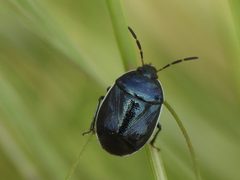
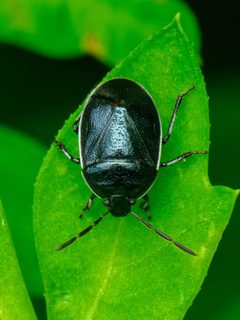
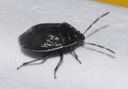
Small burrowing bug with pale marginal markings on the pronotum and forewings, characteristic of the 'white-margined' . As a member of Cydnidae, possesses (digging) adaptations including stout, spiny legs. Distinguished from other Sehirus by specific coloration patterns and genitalia; precise identification requires examination of abdominal stridulatory structures and male genitalia.
Images
Habitat
Found in association with plants in Urticaceae and Lamiaceae ; observed in environments where nettles and mints grow. Has been recorded in proximity to human-managed including , with documented association with colonies.
Distribution
Recorded from North America and Middle America; specific regional records include Vermont, United States.
Diet
Phytophagous; feeds on plants in Urticaceae (nettle) and Lamiaceae (mint) .
Host Associations
- Urticaceae - food plantnettle
- Lamiaceae - food plantmint
- Apis mellifera - associationdocumented association with honey bees; ecological nature of interaction not fully characterized
Life Cycle
Females deposit in shallow burrows. Eggs hatch into nymphs that remain in the maternal burrow. Mothers provision offspring with food for 1–3 days post-hatching, after which nymphs disperse and forage independently. Females may produce up to two per season.
Behavior
Exhibits subsocial including guarding and post-hatching food provisioning. Maternal care is initiated by chemical cues from eggs and maintained through condition-dependent offspring odors; nymphs in poor condition emit volatiles (including α-pinene and camphene) that elicit increased maternal provisioning. Maternal responsiveness is hormonally mediated through . Defensive behavior toward eggs and nymphs has been documented.
Ecological Role
Herbivore feeding on nettle and mint plants; maternal provisioning represents a form of extended rare among true bugs. Association with honey bees suggests potential role in , though nature of interaction requires further study.
Human Relevance
Documented association with colonies may indicate incidental or potentially beneficial presence in managed . Not known as a significant agricultural pest.
Similar Taxa
- other Sehirus speciescongeneric burrowing bugs share general and habits; precise identification requires examination of stridulatory structures and genitalia
- other Cydnidaeburrowing bugs share stout, spiny legs adapted for digging; Sehirus distinguished by pronotal and wing margin coloration patterns
Sources and further reading
- BugGuide
- Wikipedia
- GBIF taxonomy match
- iNaturalist taxon
- NCBI Taxonomy
- A Good Morning for a Bee | Bug Squad
- Rosie defoliators: Roseslug sawfly, Endelomyia aethiops, Curled rose sawfly, Allantus cinctus, and Bristley rose sawfly, Cladius pectinicornis — Bug of the Week
- Rosie defoliators - Roseslug sawfly, Endelomyia aethiops, Curled rose sawfly, Allantus cinctus, and Cladius pectinicornis — Bug of the Week
- Sawflies - Curled rose sawfly, Allantus cinctus, and dusky birch sawfly, Croesus latitarsus — Bug of the Week
- Archive — Bug of the Week
- Life History and Laboratory Rearing of Sehirus cinctus cinctus (Hemiptera: Cydnidae), with Descriptions of Immature Stages1
- Factors influencing maternal behaviour in a burrower bug,Sehirus cinctus(Heteroptera: Cydnidae)
- Precocene II modifies maternal responsiveness in the burrower bug, Sehirus cinctus (Heteroptera)
- Insights into the costs of complex maternal care behavior in the burrower bug (Sehirus cinctus)
- Concaveation and maintenance of maternal behavior in a burrower bug (Sehirus cinctus): A comparative perspective.
- Concaveation and maintenance of maternal behavior in a burrower bug (Sehirus cinctus): A comparative perspective.
- Maternal food provisioning in relation to condition-dependent offspring odours in burrower bugs (Sehirus cinctus)
- New Plant Host Record and First Record of the Burrower BugSehirus cinctus(Palisot de Beauvois) (Hemiptera: Cydnidae) Associating with Honey Bees,Apis melliferaL. (Hymenoptera: Apidae)