Chelinidea
Uhler, 1863
cactus bugs, cactus leaffooted bugs
Species Guides
4- Chelinidea canyona(canyon cactus bug)
- Chelinidea hunteri
- Chelinidea tabulata(Prickly Pear Bug)
- Chelinidea vittiger(cactus coreid)
Chelinidea is a of leaf-footed bugs ( Coreidae) comprising five described distributed across Central and North America, with three species introduced to Australia. Members are specialized feeders on cacti in the genus Opuntia, making them significant in both natural and agricultural contexts. The genus represents the sole member of the tribe Chelinideini.
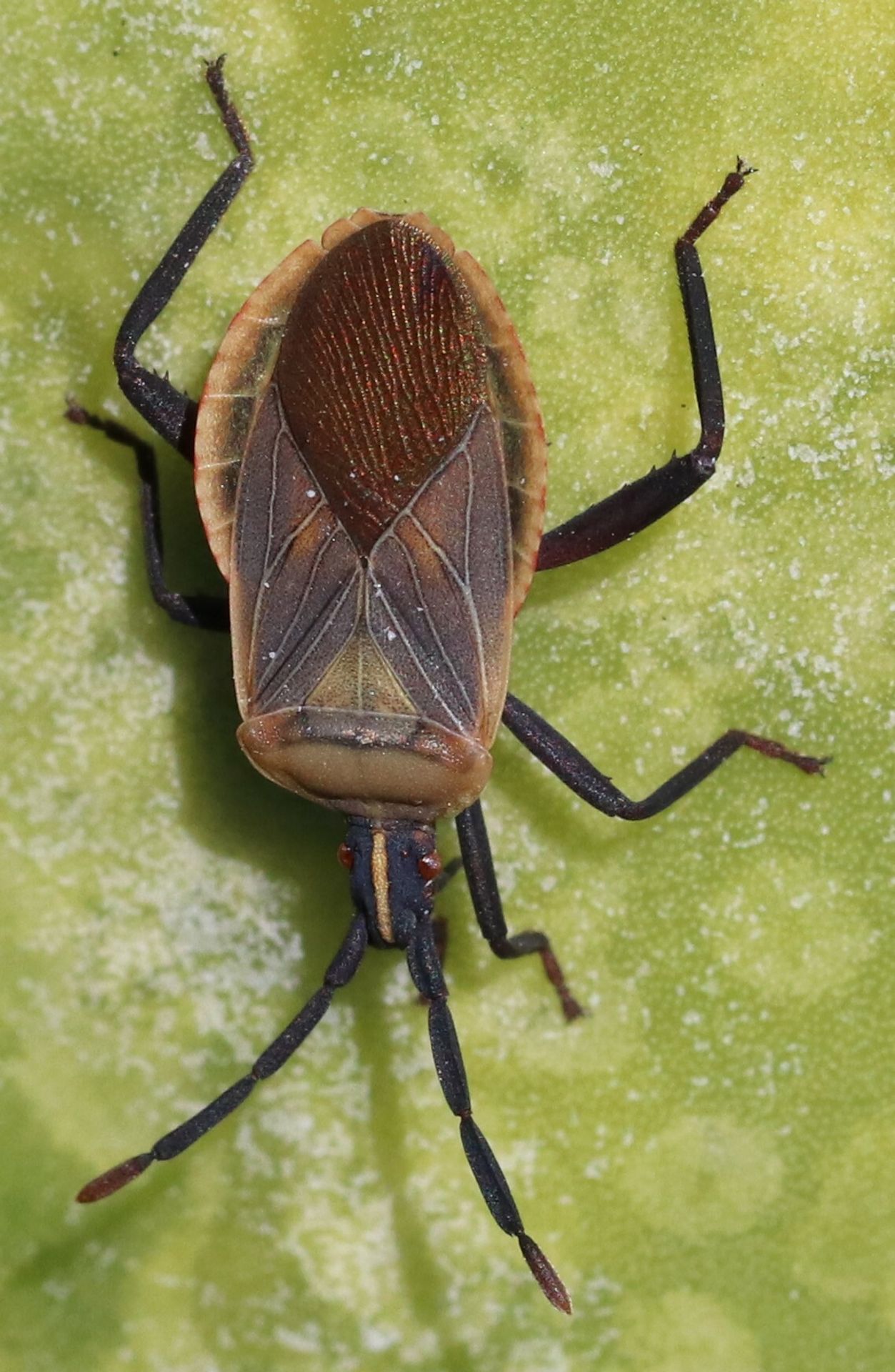
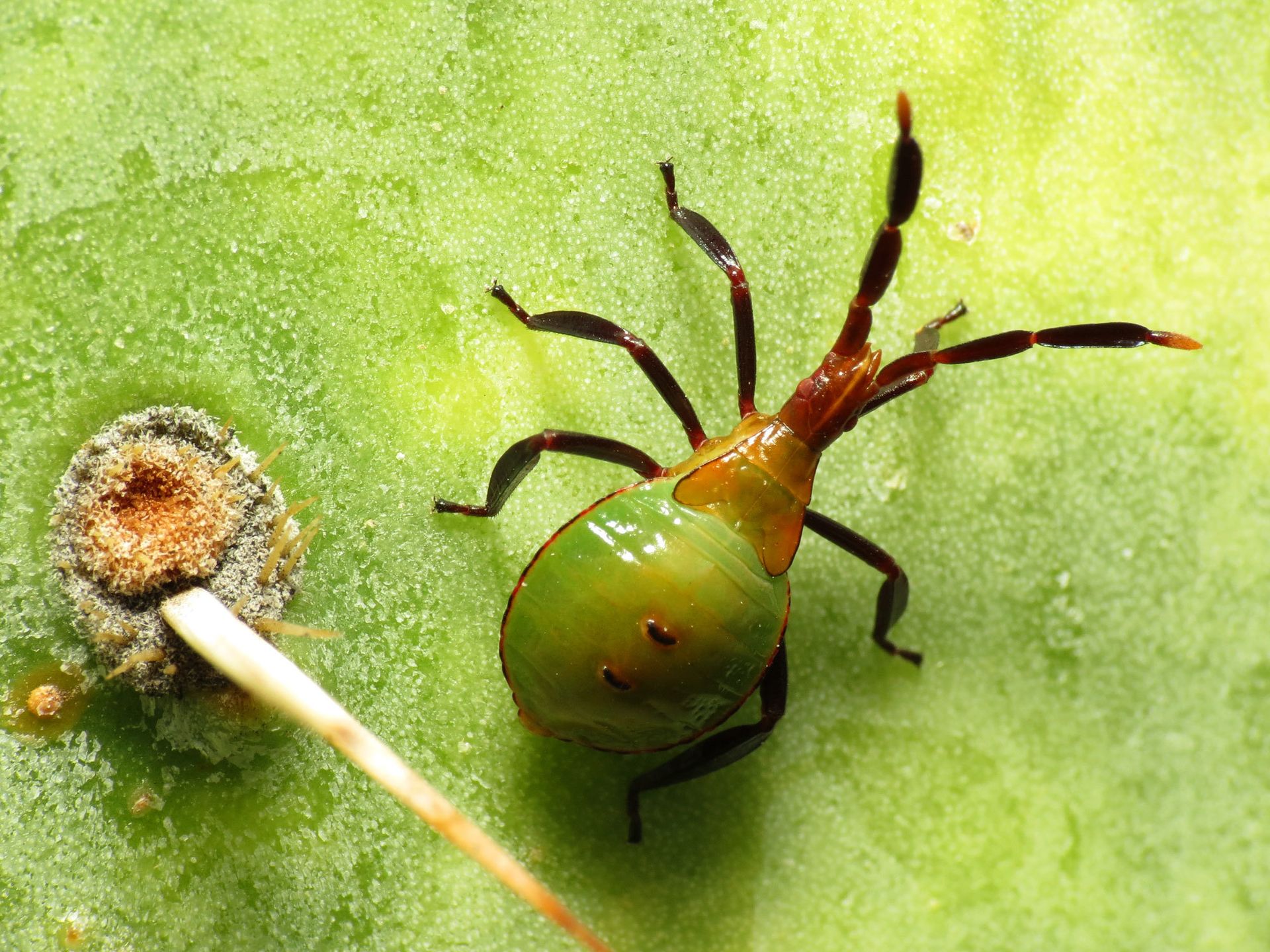
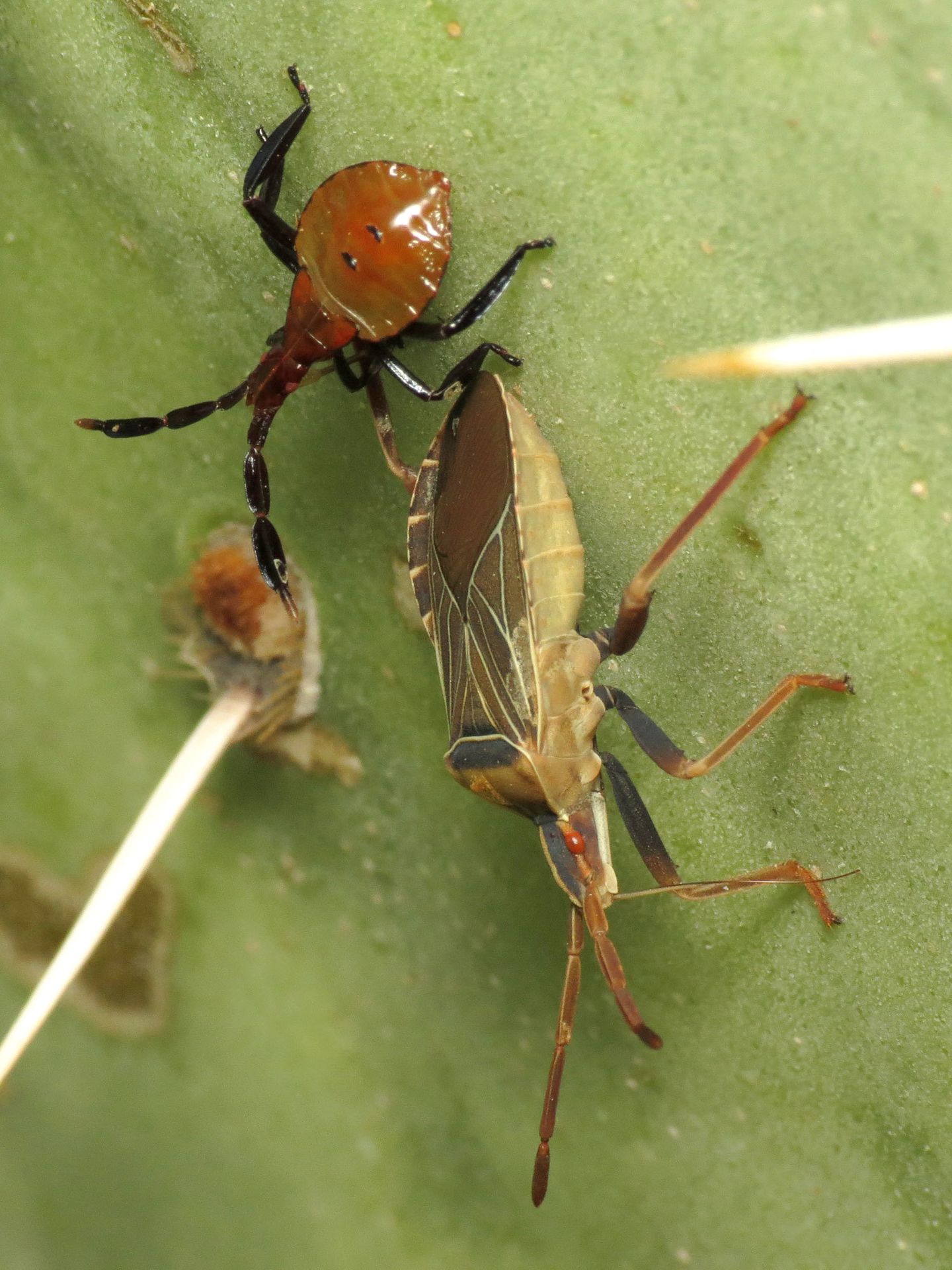
Pronunciation
How to pronounce Chelinidea: /kɛlɪˈniːdiə/
These audio files are automatically generated. While they are not always 100% accurate, they are a good starting point.
Identification
Chelinidea are recognized by their association with Opuntia cacti and their placement within Coreidae. Chelinidea vittiger, the most widely documented species, is sometimes called the "cactus coreid." Specific diagnostic morphological features for distinguishing among the five species (C. canyona, C. hunteri, C. staffilesi, C. tabulata, and C. vittiger) are not detailed in available sources.
Images
Habitat
are defined by the presence of Opuntia cacti, including prairies, glades, sand barrens, rangelands, and rocky outcrops. In Missouri, C. vittiger has been documented on igneous glades with Opuntia cespitosa. The occupies xeric to mesic environments where prickly pear cacti establish.
Distribution
Native range spans Central America, North America (United States and Mexico), and South America (C. tabulata). Three have been introduced to Australia: C. canyona, C. tabulata, and C. vittiger. Within North America, records exist from the northwestern, north-central, northeastern, and southwestern United States.
Diet
All described feed on cacti in the Opuntia. Chelinidea vittiger feeds and develops almost exclusively on pads, fruits, and young growth of Opuntia species.
Host Associations
- Opuntia - primary Required for feeding and development; range of Chelinidea coincides with distribution of Opuntia cacti
- Opuntia humifusa - Documented for C. vittiger in Missouri sand prairies
- Opuntia cespitosa - Documented for C. vittiger at Hughes Mountain Natural Area, Missouri
Life Cycle
Chelinidea vittiger has been observed as nymphs on cactus pads, indicating development occurs on plants. Detailed stages and are not fully documented in available sources.
Ecological Role
Chelinidea function as herbivores that can suppress Opuntia . C. vittiger serves as a minor component in a pest complex that limits prickly pear from aggressively overtaking North American rangelands. The species contributes to natural diversity in glade and prairie where Opuntia occurs non-aggressively.
Human Relevance
Economic impact is context-dependent: considered beneficial for of Opuntia, yet potentially detrimental where prickly pear is valued as emergency forage or harvested for produce. C. vittiger and related have been introduced to Australia as biological control agents for prickly pear weeds.
Similar Taxa
- other CoreidaeChelinidea is distinguished by its specialized association with Opuntia cacti and placement in the tribe Chelinideini; most other coreids lack this specific relationship
- other Hemiptera on OpuntiaChelinidea is distinguished by being the primary documented coreid specialized on Opuntia; other insects on cacti belong to different
Sources and further reading
- BugGuide
- Wikipedia
- GBIF taxonomy match
- iNaturalist taxon
- NCBI Taxonomy
- Catalogue of Life
- 🪲 Entomologizing w/ the WGNSS Entomology Group at Hughes Mountain Natural Area — 11 Oct 2025 | Beetles In The Bush
- A sand prairie autumn | Beetles In The Bush
- Biology of Chelinidea vittiger1 with Notes on Its Host-Plant Relationships and Value in Biological Weed Control 2