
Mezira vanduzeei
Usinger, 1936
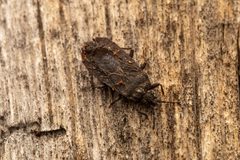
Mezira vanduzeei is a of flat bug in the Aradidae, described by Usinger in 1936. The species belongs to a family of true bugs known for their extremely flattened bodies, an for living in narrow spaces under bark and in decaying wood. Like other aradids, this species likely feeds on fungal in its concealed microhabitats. Records indicate presence in North America, though detailed biological information remains sparse.
Pronunciation
How to pronounce Mezira vanduzeei: //mɛˈzɪrə vænˈduzi.aɪ//
These audio files are automatically generated. While they are not always 100% accurate, they are a good starting point.
Identification
Distinguished from other Mezira and aradid by genitalic characters and specific antennal proportions, though detailed diagnostic features for this species are not readily available in general sources. Identification to species level typically requires examination of male genitalia and comparison with .
Images
Appearance
Extremely dorsoventrally flattened body, typical of the Aradidae. likely possess the characteristic oval to elongate-oval body shape with segmented . The is typically concealed beneath the pronotum in view. Coloration and specific body proportions are not documented in available sources.
Habitat
Associated with dead wood, bark crevices, and other concealed spaces where fungal growth occurs. Aradidae are commonly found under loose bark of dead or dying trees, in decaying stumps, and in similar microhabitats that provide both shelter and food resources.
Distribution
North America. Specific range details beyond continental presence are not documented in available sources.
Diet
Feeds on fungal , a characteristic feeding habit of the Aradidae. The use their to extract nutrients from fungal growth in their concealed woody .
Life Cycle
Behavior
Secretive, spending nearly all life stages in concealed under bark or in decaying wood. and nymphs are not commonly encountered in open habitats. When disturbed, aradids typically remain motionless, relying on their flattened form and cryptic coloration for protection.
Ecological Role
Contributes to nutrient cycling in forest through consumption of fungal in decaying wood. Serves as prey for various in the concealed of dead wood .
Human Relevance
No known economic importance. Occasionally encountered by entomologists and naturalists examining dead wood . Not a pest of living trees or structures.
Similar Taxa
- Other Mezira speciesSimilar flattened body form and preferences; require examination of genitalic structures and antennal proportions for definitive separation
- Other Aradidae generaShare extreme dorsoventral flattening and concealed woody associations; differ in antennal segment number, body proportions, and pronotal structure
More Details
Taxonomic note
The epithet 'vanduzeei' honors E.P. Van Duzee, a prominent early American entomologist known for his work on Hemiptera.
Collection records
GBIF records indicate presence in North America, with iNaturalist documenting 2 observations as of data compilation date.