
Aradus falleni
Stål, 1860
flat bug
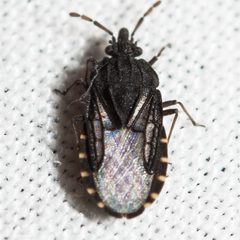
Aradus falleni is a of flat bug in the Aradidae, first described by Carl Stål in 1860. It belongs to a family characterized by dorsoventrally flattened bodies adapted for living in confined spaces under bark. The species has a broad distribution across the Caribbean Sea, Central America, North America, and South America. As with other members of Aradidae, it is likely associated with dead or decaying wood , though specific ecological details for this species remain limited in published literature.
Pronunciation
How to pronounce Aradus falleni: /ˈa.ra.dus ˈfæl.e.ni/
These audio files are automatically generated. While they are not always 100% accurate, they are a good starting point.
Identification
Aradus falleni can be distinguished from other Aradus by specific morphological features described in Stål's original 1860 description, though detailed diagnostic characters require examination of . Members of the Aradus generally exhibit extremely flattened bodies, reduced wings, and with four segments. Species-level identification within Aradus typically requires examination of male genitalia and detailed body proportions. The species may be confused with other Neotropical Aradus species, necessitating reference to original descriptions and taxonomic revisions.
Images
Distribution
Caribbean Sea; Central America; North America; South America. Distribution records include the state of Rio de Janeiro, Brazil (BR-RJ).
Similar Taxa
- Aradus macrosomusExtinct Baltic amber described by Heiss in 2014; differs in being notably larger (as reflected in its name) and having particular structural features preserved in Eocene deposits approximately 45 million years old. Unlike A. falleni, A. macrosomus is known only from fossil inclusions and represents a different temporal and ecological context.