
Ranatra montezuma
J. Polhemus, 1976
Montezuma waterscorpion
Ranatra montezuma is a waterscorpion to Montezuma Well, a thermally constant, fishless spring in Yavapai County, Arizona. It was described by J. Polhemus in 1976 and represents a highly localized with specific dietary adaptations to its unique aquatic environment. The species exhibits foraging and maintains high population densities supported by abundant endemic prey.
Pronunciation
How to pronounce Ranatra montezuma: /rəˈneɪtrə ˌmɒntɪˈzuːmə/
These audio files are automatically generated. While they are not always 100% accurate, they are a good starting point.
Identification
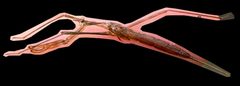
to Montezuma Well; distinguished from other Ranatra by geographic restriction to this single spring system. As with other Nepidae, possesses elongated body with long, thin respiratory siphon at end and forelegs adapted for capturing prey. Specific morphological diagnostic features distinguishing it from not documented in available sources.
Images
Habitat
Montezuma Well, a thermally constant, fishless spring environment in central Arizona. Occupies littoral vegetation zones where prey densities are elevated. The spring maintains stable thermal conditions year-round, supporting a distinctive aquatic .
Distribution
to Montezuma Well, Yavapai County, Arizona, United States. No other known.
Diet
First-instar nymphs feed primarily on copepods. preferentially consume the amphipod Hyalella montezuma. Also preys upon larvae (Telebasis salva), though less frequently due to their sedentary .
Behavior
forager; feeds more actively at night when prey densities are elevated in littoral vegetation. Prey strongly influences capture success: actively swimming prey (Hyalella montezuma) are captured more frequently than sedentary prey ( larvae).
Ecological Role
in a simplified, fishless aquatic . High standing crop maintained by abundant prey resources.
Sources and further reading
- BugGuide
- Wikipedia
- GBIF taxonomy match
- iNaturalist taxon
- Catalogue of Life
- Grasshoppers of Colorado
- Grasshoppers of Colorado
- UC Davis-Based Projects: To Bee or Not to Bee? | Bug Squad
- Diversity of Bugs at Bohart Museum of Entomology | Bug Squad
- Big, black (and red), and beautiful! | Beetles In The Bush
- Belostomatidae | Beetles In The Bush
- Daily energy ingestion by the predatory Ranatra montezuma (Heteroptera) on two prey types: Importance of prey behaviour
- The impact of prey behaviour and prey density on the foraging ecology of Ranatra montezuma (Heteroptera): a serological examination