
Rhagovelia ignota
Drake & Harris, 1933
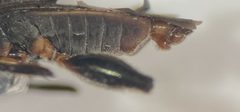
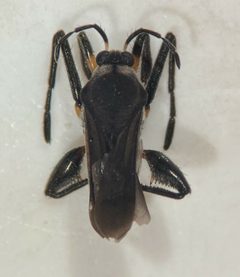
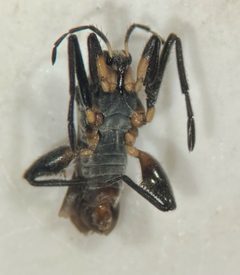
Rhagovelia ignota is a of small water strider in the Veliidae, described by Drake & Harris in 1933. The Rhagovelia is distinguished by modified hind legs with fan-like fringes of setae used for propulsion on water surfaces. This species is recorded from Middle America, though specific ecological details remain poorly documented.
Pronunciation
How to pronounce Rhagovelia ignota: //ˌræɡoʊˈvɛliə ɪɡˈnoʊtə//
These audio files are automatically generated. While they are not always 100% accurate, they are a good starting point.
Identification
Members of Rhagovelia can be distinguished from other Veliidae by the presence of fan-like fringes of long setae on the tibiae and of the hind legs, which function as paddles for rapid movement across water surfaces. Specific identification of R. ignota requires examination of male genitalia and comparison with ; external is highly conserved within the .
Images
Habitat
Rhagovelia are generally associated with flowing freshwater including streams and rivers, often on riffles and areas with moderate current. Specific habitat preferences for R. ignota have not been documented.
Distribution
Middle America (sensu Catalogue of Life and GBIF records). Precise country-level distribution is not established in available sources.
Behavior
Rhagovelia exhibit rapid skimming locomotion on water surfaces using their modified hind legs, which can achieve speeds exceeding 1 m/s. They are capable of jumping to escape . Specific behavioral observations for R. ignota are not recorded.
Ecological Role
As surface-dwelling in aquatic , Rhagovelia likely contribute to control and serve as prey for larger aquatic and terrestrial predators. Specific ecological role of R. ignota is unstudied.
Similar Taxa
- Rhagovelia speciesOther members of the share the diagnostic fan-fringed hind legs and general body plan; -level identification requires genitalic examination.
- Other Veliidae genera (e.g., Velia, Microvelia)Lack the expanded fan-like setal fringes on hind legs; move by rowing with middle legs rather than propulsion with modified hind legs.