
Rheumatobates trulliger
Bergroth, 1915
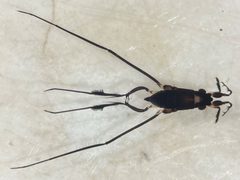
Rheumatobates trulliger is a of water strider in the Gerridae, first described by Bergroth in 1915. It belongs to the Rhagodotarsinae, a group of small to minute water striders adapted to life on the water surface. The Rheumatobates is characterized by distinctive modifications of the male genitalia and leg structures. This species is part of the diverse North American fauna of semi-aquatic heteropterans.
Pronunciation
How to pronounce Rheumatobates trulliger: //ˌruːmətoʊˈbeɪtiːz ˈtrʌlɪdʒər//
These audio files are automatically generated. While they are not always 100% accurate, they are a good starting point.
Identification
Members of Rheumatobates are among the smallest water striders (Gerridae), with body lengths typically under 5 mm. Males possess highly modified genital segments and often elaborate leg modifications used in mating displays. The can be distinguished from other Rhagodotarsinae by the structure of the male parameres and the arrangement of on the . Specific identification of R. trulliger requires examination of male genitalic structures, particularly the shape of the proctiger and parameres; females are difficult to identify to without associated males.
Images
Habitat
Inhabits the surface film of freshwater bodies, including ponds, slow-moving streams, and marshy areas. Like other members of the Rhagodotarsinae, it is associated with vegetated or debris-rich margins where surface tension are stable.
Distribution
Recorded from North America. Distribution details beyond continental-level records are sparse due to limited collection and taxonomic study.
Ecological Role
As a surface-dwelling , contributes to the control of small and organic matter processing at the air-water interface. Its small size suggests specialization on minute prey such as springtails and other microarthropods trapped in the surface film.
Human Relevance
No direct economic or medical significance. Of interest primarily to in aquatic heteropteran .
Similar Taxa
- Rheumatobates rileyiOverlapping distribution in North America; distinguished by male genitalic , particularly the shape and armature of the parameres and proctiger.
- Rheumatobates thinopusSimilar size and preference; requires dissection and comparison of male terminalia for reliable separation.
- Rhagovelia speciesMembers of the same Rhagodotarsinae with similar microhabitat use; distinguished by leg structure (Rhagovelia possesses hind tibial plumes for propulsion on flowing water, absent in Rheumatobates) and male genitalia.
More Details
Taxonomic history
The was described by Finnish entomologist Eeva Bergroth in 1915 based on material from North America. The Rheumatobates has undergone significant revision, with many species descriptions relying heavily on male genitalic characters due to the morphological similarity of external features.
Collection challenges
in this are rarely collected in large numbers due to their minute size and specialized on the water surface. Standard aquatic insect sampling methods often miss these surface-dwelling forms; targeted collection using fine-meshed surface nets or careful visual search is required.