Sinea spinipes
(Herrich-Schaeffer, 1846)
Spiny Assassin Bug
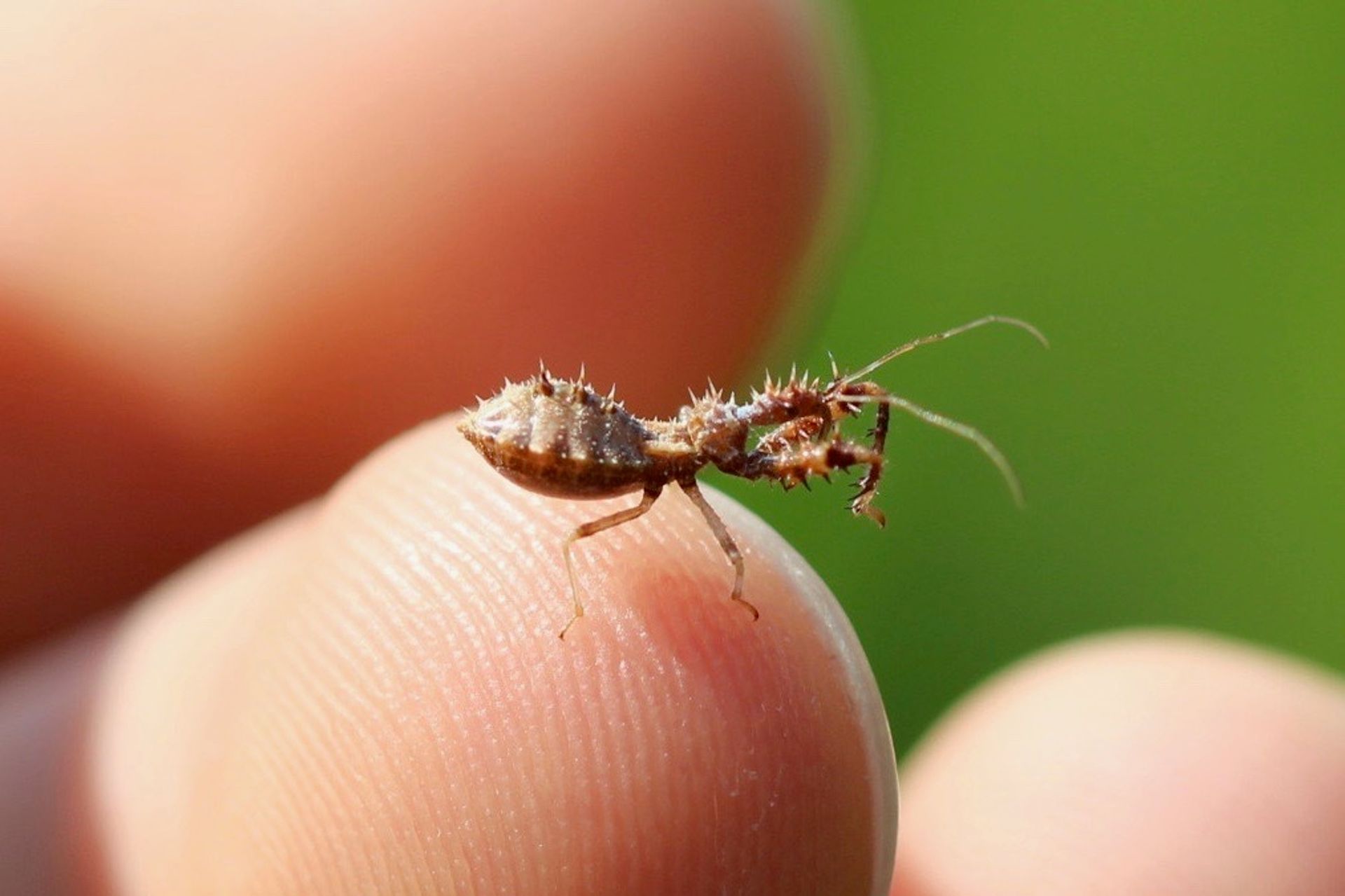
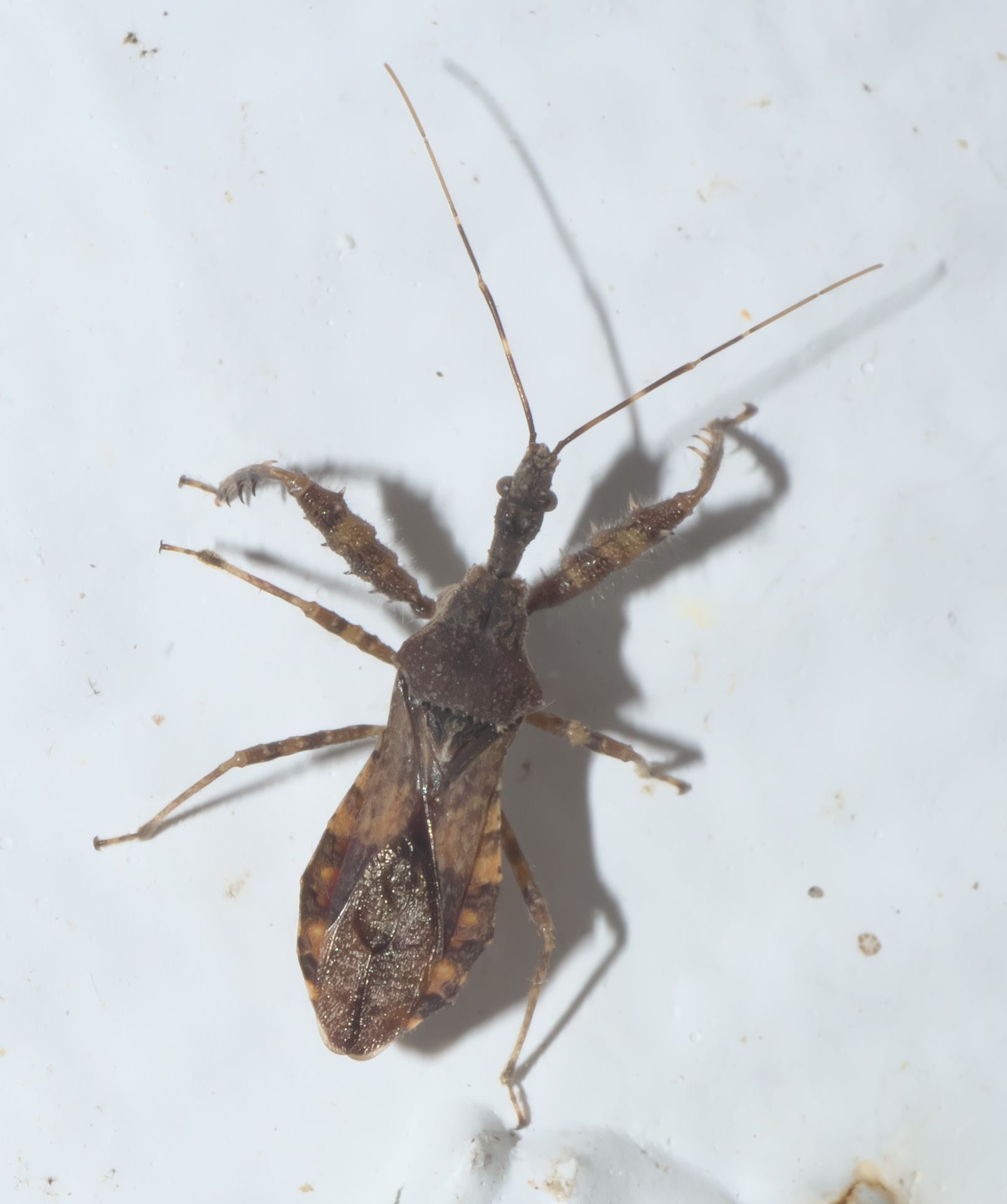
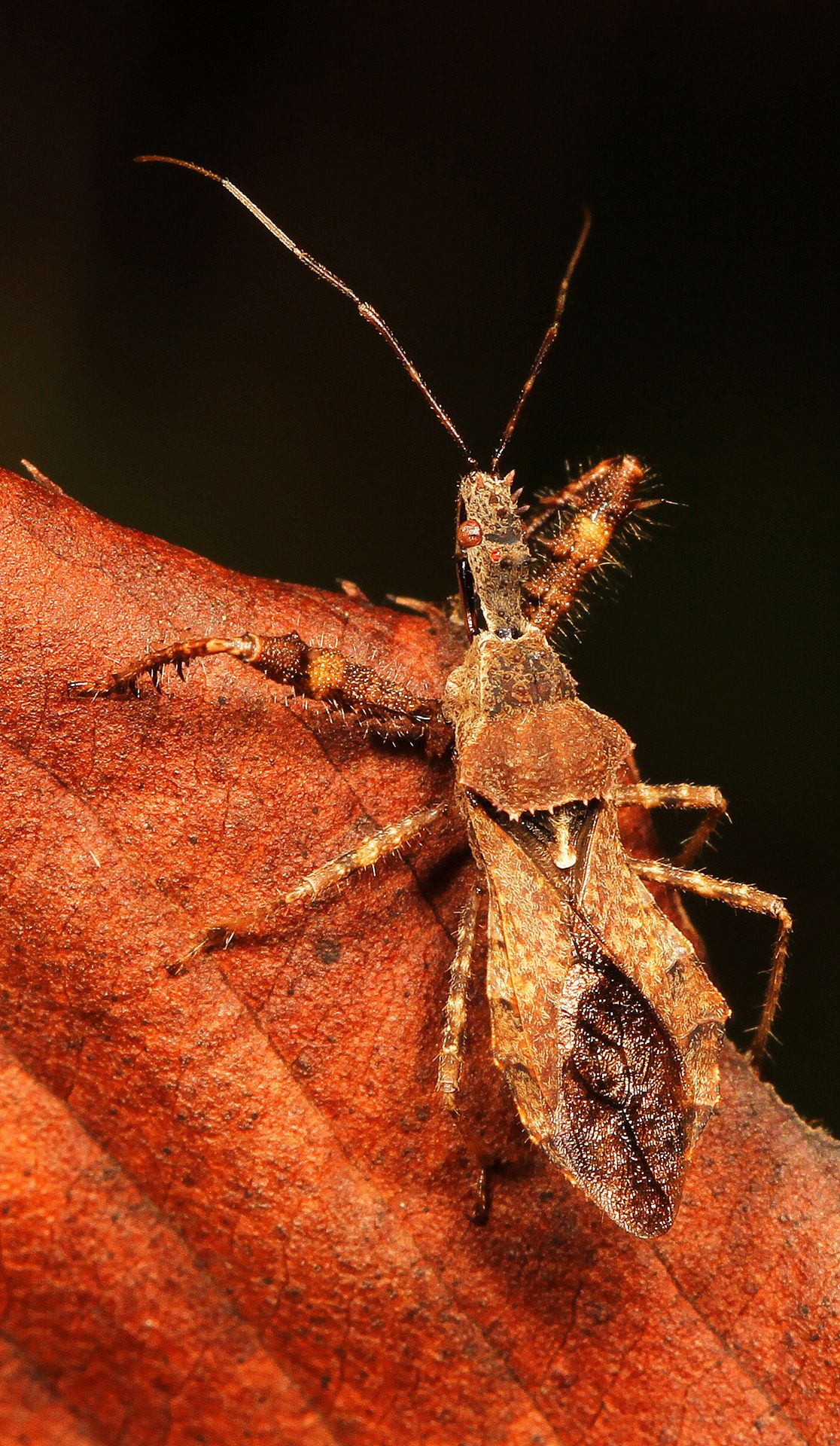
Sinea spinipes is a North American assassin bug in the Harpactorinae, commonly known as the Spiny Assassin Bug. It is native to the midwestern United States where it inhabits roadsides, forest edges, and open fields with scattered trees. In southern Illinois, are , producing one per year. The is part of a complex of similar Sinea species that can be distinguished by leg .
Pronunciation
How to pronounce Sinea spinipes: /ˈsɪneɪə ˈspɪnɪˌpiːz/
These audio files are automatically generated. While they are not always 100% accurate, they are a good starting point.
Identification
Distinguished from the similar Acholla by the presence of prominent spines on the inner surface of the tibia on the front leg; Acholla lacks these spines and has a less "thorny" appearance overall. Sinea spinipes is slightly smaller than Acholla (12-14 mm vs. 12-16 mm). Differentiation from other Sinea species (S. complexa, S. diadema, S. incognita, S. integra) requires examination of leg , particularly the shape and proportions of the front .
Images
Appearance
Body length ranges 12-14 mm. Distinguished by prominent spines on the inner surface of the tibia ("shin" segment) of the front leg, giving a "thorny" appearance. The of the front legs are notably thickened. Overall body form typical of Harpactorinae assassin bugs with forelegs adapted for prey capture.
Habitat
Roadsides, forest edges, and open fields with scattered trees. Associated with disturbed and edge environments in the midwestern United States.
Distribution
Native to North America; occurs in the midwestern United States. Distribution records indicate presence in Middle America and North America.
Seasonality
active during warmer months. In southern Illinois, the is with one per year, suggesting adult activity primarily in summer and early autumn.
Life Cycle
in southern Illinois (one per year). stages have been described, though specific details of developmental duration and stage are not documented in available sources.
Ecological Role
Predatory insect, likely contributing to control of other insect in its . Has been observed in sunflower fields, suggesting potential role in agricultural and semi-natural .
Similar Taxa
- Acholla spp.Lacks prominent tibial spines present in Sinea; slightly larger body size (12-16 mm vs. 12-14 mm); less "thorny" overall appearance
- Sinea complexaWestern and southwestern distribution; front shape differs (more baseball bat-like vs. club-like in related )
- Sinea incognitaMidwestern distribution overlapping with S. spinipes; distinguished by front (caveman club shape in S. incognita)
- Sinea integraSouthwestern distribution; front nearly uniform in width (stickball bat shape) unlike thickened femur of S. spinipes
More Details
Taxonomic Context
Part of a within Sinea that has undergone recent revision; historically confused with S. complexa until McPherson's 2006 work clarified boundaries based on leg .
Research Significance
Subject of studies including laboratory rearing protocols; stages have been formally described.
Sources and further reading
- BugGuide
- Wikipedia
- GBIF taxonomy match
- iNaturalist taxon
- NCBI Taxonomy
- Catalogue of Life
- Newly Discovered Assassin Bug was Incognito, but Now it's Incognita
- Eavesdropping Bees Encouraged by "Whispers," Deterred by "Shouts"
- Bug Eric: Spider Sunday: Labyrinth Spiders
- Bug Eric: Autumn Assassins: Acholla spp.
- Bug Eric: City Nature Challenge 2023 Recap
- Bug Eric: Sunflower Extravaganza
- Life History and Laboratory Rearing of <I>Sinea spinipes</I> (Heteroptera: Reduviidae) with Descriptions of Immature Stages