
Rhiginia cruciata
(Say, 1832)
scarlet-bordered assassin bug, cruciate assassin bug
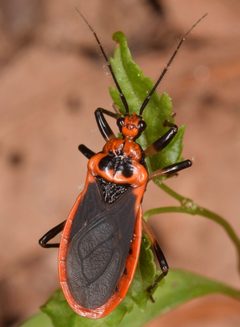
Rhiginia cruciata is a predatory true in the Reduviidae, commonly called the scarlet-bordered or cruciate assassin bug. It is classified among the "millipede assassins" in the Ectrichodiinae, a group specialized for hunting millipedes. The occurs across the Caribbean, Central America, and North America.
Pronunciation
How to pronounce Rhiginia cruciata: //rɪˈdʒɪniə ˌkruːsiˈɑːtə//
These audio files are automatically generated. While they are not always 100% accurate, they are a good starting point.
Identification
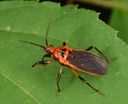
The "scarlet-bordered " suggests distinctive red or orange marginal markings on the body, though specific diagnostic features for field identification are not documented in available sources. As a member of Ectrichodiinae, it likely shares the 's general body plan: elongated form, forelegs adapted for grasping prey, and a curved rostrum for piercing. Positive identification requires examination of genitalic structures or other subtle morphological characters.
Images
Distribution
Caribbean, Central America, and North America. Specific countries or types within this range are not documented in available sources.
Diet
As a member of the Ectrichodiinae (millipede assassins), this is specialized for preying on millipedes. Ectrichodiines possess behavioral and morphological adaptations to overcome the chemical defenses of millipedes.
Behavior
Members of Ectrichodiinae are known to attack millipedes by targeting vulnerable regions between body segments, avoiding the defensive secretions produced by most millipedes. This represents a specialized predatory strategy within the Reduviidae.
Ecological Role
of millipedes. Millipede assassins may help regulate in forest floor and soil .
Human Relevance
Like most reduviids, this can deliver a painful bite if handled carelessly. It is not considered a significant pest or beneficial species in agricultural contexts.
Similar Taxa
- Other Reduviidae (non-Ectrichodiinae assassin bugs)Most assassin bugs lack the -specialized and of Ectrichodiinae. reduviids typically have different body proportions and prey on a broader range of arthropods.
- Other Ectrichodiinae species within this share the - specialization but differ in color pattern, size, and distribution. Rhiginia cruciata is distinguished by its specific pattern of markings and geographic range, though precise differentiating characters require knowledge.
More Details
Subfamily classification
Placement in Ectrichodiinae (millipede assassins) is well-established and indicates a derived ecological specialization uncommon among predatory .
Observation frequency
The has over 1,200 observations on iNaturalist, suggesting it is encountered with moderate frequency by naturalists in its range, though it is not among the most commonly photographed insects.