
Kalama
Puton, 1876
Species Guides
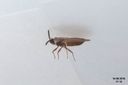
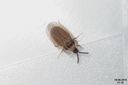
1- Kalama tricornis(hairy lacebug)
Kalama is a of true bugs in the Tingidae, commonly known as lace bugs. These small, flattened insects are characterized by their intricate, reticulated wing covers that give them a lace-like appearance. The genus was established by Puton in 1876 and contains distributed across northern Europe, with records from Denmark, Norway, and Sweden.

Pronunciation
How to pronounce Kalama: /kəˈlɑːmə/
These audio files are automatically generated. While they are not always 100% accurate, they are a good starting point.
Identification
Lace bugs in the Kalama can be distinguished from other tingids by their flattened, oval body shape and the distinctive lace-like pattern formed by the raised on the and pronotum. Members of this genus typically exhibit the -wide trait of having the pronotum expanded forward over the , creating a hood-like structure. Specific -level identification within Kalama requires examination of subtle differences in pronotal and hemelytral reticulation patterns, as well as body proportions.
Images
Distribution
Northern Europe: documented from Denmark, Norway, and Sweden.
Diet
Phloem feeders: lace bugs pierce plant tissues to extract sap.
Similar Taxa
- DictyonotaKalama has been treated as a subgenus of Dictyonota in some classifications (Catalogue of Life), indicating close morphological similarity and potential confusion between these .
- CorythuchaBoth share the lace bug body plan with reticulated wings and hooded pronotum, but Corythucha is primarily North American while Kalama is Palearctic.
More Details
Taxonomic instability
The taxonomic status of Kalama has varied across sources: treated as a full by Puton (1876), GBIF, and NCBI; listed as a subgenus of Dictyonota by Catalogue of Life. This reflects ongoing debate about groupings within the Tingidae.
Etymology note
The name 'Kalama' predates and is unrelated to Kalama of Hawaiʻi (1817–1870), despite the identical spelling. The entomological name was established by Puton in 1876, the same year as the queen's death, but there is no evidence of commemorative intent.
Sources and further reading
- BugGuide
- Wikipedia
- GBIF taxonomy match
- iNaturalist taxon
- NCBI Taxonomy
- Catalogue of Life
- Honey Bee Biology | Bug Squad
- Monika Egerer: About Those Wild Bees and Natural Enemies in Urban Gardens | Bug Squad
- Tracking a Montane Leaf Beetle | Bug Squad
- Why Turning 40 Is a Bee-Boggling Event: Western Apicultural Society's Big Conference | Bug Squad
- Don't Miss Bohart Museum Open House on Moths! | Bug Squad
- UC Davis Faculty, Staff to Offer Expertise at Bee Conference | Bug Squad
- Diagnosing High Water Production in Kalama Field, Niger Delta