
Leptoypha mutica
(Say, 1832)
Fringetree Lace Bug
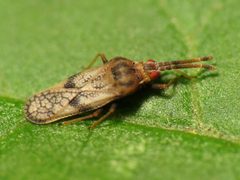
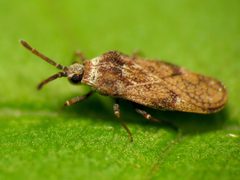
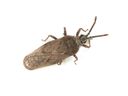
Leptoypha mutica is a lace bug ( Tingidae) native to North and Central America. It is a herbivore of plants in the family Oleaceae, with documented associations including ash (Fraxinus), fringetree (Chionanthus virginicus), lilac (Syringa villosa), and Chinese privet (Ligustrum sinense). The has been studied for its developmental and choice , particularly on Chinese privet. Its feeding causes chlorotic blotches on leaves, with damage concentrated around leaf midribs and lateral .
Pronunciation
How to pronounce Leptoypha mutica: //lɛpˈtɔɪfə ˈmjuːtɪkə//
These audio files are automatically generated. While they are not always 100% accurate, they are a good starting point.
Identification
Images
Habitat
Associated with trees and shrubs in the Oleaceae, including landscape plantings, forest edges, and areas where plants occur.
Distribution
Widespread across eastern and central North America, with records from numerous U.S. states and Central America. GBIF distribution records indicate presence across most of the eastern United States, extending west to the Great Plains and Texas.
Diet
feeder on Oleaceae; feeds on plant sap from leaves, causing chlorotic blotches concentrated around midribs and lateral .
Host Associations
- Fraxinus spp. - primary ash
- Chionanthus virginicus - primary fringetree; source of
- Syringa villosa - late lilac; first reported in Pennsylvania in 1987-1988
- Ligustrum sinense - Chinese privet; subject of developmental and choice studies
Life Cycle
Developmental has been studied on Chinese privet (Ligustrum sinense); specific details of life stages and duration not fully extracted from available sources.
Behavior
Nymphs and observed together on plants. Host choice demonstrated in feeding studies.
Ecological Role
Potential agent for Chinese privet (Ligustrum sinense), an plant in some regions.
Human Relevance
Considered for potential use in managing Chinese privet . Feeding damage to ornamental Oleaceae including fringetree and lilac may occur in landscape settings.
Sources and further reading
- BugGuide
- Wikipedia
- GBIF taxonomy match
- iNaturalist taxon
- NCBI Taxonomy
- Catalogue of Life
- longhorned beetles | Beetles In The Bush | Page 10
- Developmental Biology ofLeptoypha mutica(Hemiptera: Tingidae) on Chinese Privet (Lamiales: Oleaceae)
- Host Utilization of Chinese Privet (Lamiales: Oleaceae) and Host Choice byLeptoypha mutica(Hemiptera: Tingidae)
- Late Lilac, <i>Syringa Villosa</i>: New Host of the Lace Bug <i>Leptoypha Mutica</i> (Heteroptera: Tingidae)