
Acalypta
Westwood, 1840
Species Guides
7- Acalypta barberi
- Acalypta cooleyi(Cooley's lace bug)
- Acalypta elegans
- Acalypta lillianis(Lillian's lace bug)
- Acalypta nyctalis
- Acalypta parvula(moss lacebug)
- Acalypta saundersi
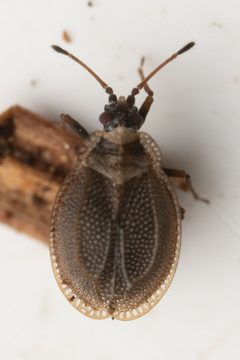
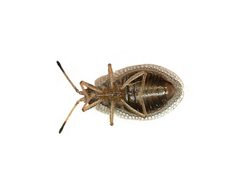
Acalypta is a of moss-feeding lace bugs (Tingidae) comprising approximately 47-50 described distributed across the northern hemisphere. Unlike most lace bugs that feed on vascular plants, Acalypta species are specialized on mosses. The genus exhibits wing , with both (fully winged) and brachypterous (short-winged) morphs occurring within species.

Pronunciation
How to pronounce Acalypta: /ˌækəˈlɪptə/
These audio files are automatically generated. While they are not always 100% accurate, they are a good starting point.
Identification
Distinguished from other lace bug by its association with moss rather than angiosperm leaves. Wing (presence of both and brachypterous individuals) is common. For -level identification, consult regional keys; ten species are recognized in Japan.
Images
Habitat
Moss-dominated environments including deciduous broad-leaved forest floors, marshlands, and grasslands. show specificity: some inhabit forest floor mosses, others marshland mosses, and some occupy broader grassland habitats.
Distribution
Northern hemisphere including Europe, Asia, and North America. Recorded from Japan (Hokkaido, Honshu, Shikoku, Kyushu, Rishiri Island), Korea, Mongolia, and across Europe from Scandinavia to the Mediterranean.
Seasonality
have been collected in July in Japan; in other regions adults occur in nearly all seasons. stage is adult or elder nymph in regions outside Japan; overwintering stage unknown for Japanese .
Diet
Feeds on mosses (Bryophyta).
Life Cycle
Wing present: both and brachypterous morphs occur. as or elder nymph reported from some regions.
Behavior
Highly -specific to mosses. Feeds on abaxial (lower) surfaces of moss leaves. Ground-dwelling habit.
Ecological Role
Member of ground-living heteropteran ; specialized moss herbivore.
Similar Taxa
- DictyonotaClosely related in tribe Acalyptaini; both share tribal characteristics but differ in associations and
- KalamaClosely related in tribe Acalyptaini
- DerephysiaClosely related in tribe Acalyptaini
- RecaredusClosely related in tribe Acalyptaini
Sources and further reading
- BugGuide
- Wikipedia
- GBIF taxonomy match
- iNaturalist taxon
- NCBI Taxonomy
- Catalogue of Life
- New record of the lace bug species Acalypta marginata (Wolff) (Hemiptera: Heteroptera: Tingidae) from Japan
- ECOLOGY OF THE ACALYPTA SPECIES OCCURRING IN HUNGARY (INSECTA: HETEROPTERA: TINGIDAE) DATA TO THE KNOWLEDGE ON THE GROUND-LIVING HETEROPTERA OF HUNGARY, No 3.
- A new species and two new records of the moss-feeding lace bug genus Acalypta (Hemiptera, Heteroptera, Tingidae) from Hokkaido, northern Japan, with an illustrated key to the Japanese species of the genus.
- Tribe Acalyptaini (Hemiptera: Tingidae: Tinginae) Revisited: Can Apomorphies in Secondary and Tertiary Structures of 18S rRNA Length-Variable Regions (LVRs) Support Tribe Validity?