
Microtechnites
garden fleahopper
Species Guides
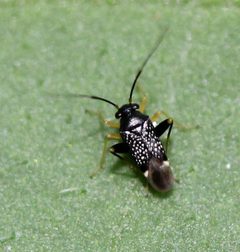
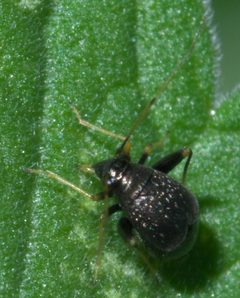
1- Microtechnites bractatus(garden fleahopper)
Microtechnites is a of plant bugs in the Miridae containing approximately six described . The genus includes the garden fleahopper (M. bractatus), an economically significant agricultural pest with a broad range spanning at least 17 plant families. Species in this genus are distributed across the Americas from Canada to Argentina. M. bractatus has been extensively studied for its developmental and host plant interactions.
Pronunciation
How to pronounce Microtechnites: //ˌmɪkroʊˈtɛknɪtiːz//
These audio files are automatically generated. While they are not always 100% accurate, they are a good starting point.
Images
Habitat
Agricultural and cultivated areas; associated with crop plants and their wild relatives. Laboratory rearing studies indicate successful development occurs under controlled conditions of 25±2°C, 70±15% relative humidity, and 12-hour light-dark cycles.
Distribution
Recorded from Canada, United States (including Vermont and Indiana), Mexico, Nicaragua, and Brazil (Paraná). Distribution data primarily reflects agricultural records and may not represent full natural range.
Diet
Phytophagous; feeds on plant sap from leaves. M. bractatus has been documented feeding on Fabaceae (beans, white clover, alfalfa), Solanaceae (potato), and Poaceae (wheat), among at least 17 plant total.
Host Associations
- Phaseolus vulgaris - common bean
- Trifolium repens - white clover
- Medicago sativa - alfalfa
- Solanum tuberosum - potato
- Triticum aestivum - wheat
Life Cycle
stage averages 10 days incubation. Five nymphal instars; dimorphic wing pads appear in fifth instar. Development duration and survival vary significantly with plant quality.
Behavior
Nymphs and suck plant sap, causing characteristic whitish spots on leaves and reducing photosynthetic rate. are deposited individually beneath leaf or petiole with only the exposed.
Ecological Role
Agricultural pest causing growth delay and plant mortality at early development stages. Severe have caused 60% yield losses in alfalfa crops. M. bractatus has been reported as a of Sowbane mosaic virus and Tobacco velvet mottle virus (Sobemovirus), though this capability is based on literature citations rather than direct experimental confirmation.
Human Relevance
Economic pest of cultivated crops including beans, clover, alfalfa, potato, and wheat. management is relevant to agricultural production systems.
More Details
Species Composition
The contains six described : M. altigena, M. bractatus, M. canus, M. chrysolepis, M. inesalti, and M. spegazzinii. Most biological data available pertains to M. bractatus; other species remain poorly studied.
Research Limitations
Available ecological and behavioral data derive primarily from controlled laboratory on five plants. Field , natural preferences, and non-agricultural host associations have not been directly studied.