
Apolygus
China, 1941
Species Guides
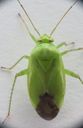
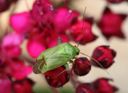
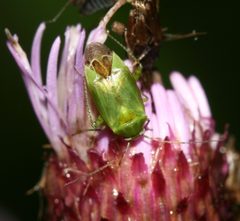
1Apolygus is a large trans-Palearctic of plant bugs (Miridae: Mirinae) comprising approximately 74 , with greatest diversity in Asia. The genus was established by China in 1941 and includes economically important agricultural pests, particularly A. lucorum and A. spinolae. Species delimitation within the genus is taxonomically challenging due to morphological similarities, requiring integrative approaches combining and molecular markers.
Pronunciation
How to pronounce Apolygus: //æˈpɒlɪɡəs//
These audio files are automatically generated. While they are not always 100% accurate, they are a good starting point.
Identification
identification within Apolygus requires integrative taxonomic approaches. A. lucorum and A. spinolae are morphologically very similar and cannot be reliably distinguished using the standard COI barcoding region. The nuclear marker ITS1 has been identified as the most reliable marker for species delimitation and identification. A. lucorum was historically confused with multiple species (A. malaisei, A. nigronasutus, A. nigrovirens) that have been synonymized with A. spinolae. A. limbatus may represent two cryptic species based on morphological and COI phylogenetic data, though this requires further investigation.
Images
Distribution
Trans-Palearctic distribution with greatest diversity in Asia. Fifteen have been recorded from Russia, including trans-Palearctic species A. limbatus, A. lucorum, and A. spinolae. A. gotorum and A. subhilaris have been newly reported from Russia. A. shikotan was described from Shikotan in the Kuril Islands.
Ecological Role
A. lucorum and A. spinolae are economically important agricultural pests. A. lucorum exhibits phytozoophagous feeding , combining plant feeding with facultative on phytophagous insects including of Helicoverpa armigera, nymphs of Aphis gossypii, and nymphs of Bemisia tabaci.
Human Relevance
A. lucorum is a major agricultural pest causing serious damage to various crops including cotton, fruit trees, and jujube (Ziziphus jujuba), resulting in substantial economic losses. Its and mesophyll-feeding habits contribute to its pest status. The has been investigated for potential use in of other pests due to its predatory , though its predominantly phytophagous nature limits practical application.
Similar Taxa
More Details
Genomic Resources
A - reference (1.02 Gb) has been assembled for A. lucorum, representing the first sequenced genome in the Miridae. The genome contains 17 chromosomes and shows expansions of genes associated with digestion, chemosensory perception, and detoxification, contributing to the ' environmental adaptability and pest status. A salivary polygalacturonase unique to mirid bugs has significantly expanded in A. lucorum, potentially contributing to leaf damage.
Taxonomic History
Recent taxonomic revision synonymized A. lucorum, A. malaisei, A. nigronasutus, and A. nigrovirens with A. spinolae based on morphological and molecular data showing no consistent differences. The synonymy of A. syringae with A. hilaris was also supported.
Sources and further reading
- BugGuide
- Wikipedia
- GBIF taxonomy match
- iNaturalist taxon
- NCBI Taxonomy
- Catalogue of Life
- Integrative delimitation of Apolygus (Insecta: Heteroptera: Miridae: Mirinae) species known from Russia with the emphasis on Apolygus lucorum and Apolygus spinolae having trans-Palearctic distribution
- Evaluation of Predation on Phytophagous Insects by a Phytozoophagous Mirid Bug, Apolygus lucorum
- Overwintering hosts of Apolygus lucorum (Hemiptera: Miridae) in northern China
- Apolygus lucorum genome provides insights into omnivorousness and mesophyll feeding
- Supplementary Material 3 from: Namyatova AA, Dzhelali PA, Bolshakova DS (2026) Integrative delimitation of Apolygus (Insecta: Heteroptera: Miridae: Mirinae) species known from Russia with the emphasis on Apolygus lucorum and Apolygus spinolae having trans-Palearctic distribution. Arthropod Systematics & Phylogeny 84: 47-93. https://doi.org/10.3897/asp.84.e161376
- Figure 4 from: Namyatova AA, Dzhelali PA, Bolshakova DS (2026) Integrative delimitation of Apolygus (Insecta: Heteroptera: Miridae: Mirinae) species known from Russia with the emphasis on Apolygus lucorum and Apolygus spinolae having trans-Palearctic distribution. Arthropod Systematics & Phylogeny 84: 47-93. https://doi.org/10.3897/asp.84.e161376
- Supplementary Material 2 from: Namyatova AA, Dzhelali PA, Bolshakova DS (2026) Integrative delimitation of Apolygus (Insecta: Heteroptera: Miridae: Mirinae) species known from Russia with the emphasis on Apolygus lucorum and Apolygus spinolae having trans-Palearctic distribution. Arthropod Systematics & Phylogeny 84: 47-93. https://doi.org/10.3897/asp.84.e161376
- Supplementary Material 1 from: Namyatova AA, Dzhelali PA, Bolshakova DS (2026) Integrative delimitation of Apolygus (Insecta: Heteroptera: Miridae: Mirinae) species known from Russia with the emphasis on Apolygus lucorum and Apolygus spinolae having trans-Palearctic distribution. Arthropod Systematics & Phylogeny 84: 47-93. https://doi.org/10.3897/asp.84.e161376
- The Jasmonic Acid Signaling Pathway Plays an Important Role in Ziziphus jujuba Resistance to Apolygus lucorum
- Figure 1 from: Namyatova AA, Dzhelali PA, Bolshakova DS (2026) Integrative delimitation of Apolygus (Insecta: Heteroptera: Miridae: Mirinae) species known from Russia with the emphasis on Apolygus lucorum and Apolygus spinolae having trans-Palearctic distribution. Arthropod Systematics & Phylogeny 84: 47-93. https://doi.org/10.3897/asp.84.e161376
- Key Amino Residues Determining Binding Activities of the Odorant Binding Protein AlucOBP22 to Two Host Plant Terpenoids of Apolygus lucorum
- Key Amino Residues Determining Binding Activities of the Odorant Binding Protein AlucOBP22 to Two Host Plant Terpenoids of Apolygus lucorum
- Figure 13 from: Namyatova AA, Dzhelali PA, Bolshakova DS (2026) Integrative delimitation of Apolygus (Insecta: Heteroptera: Miridae: Mirinae) species known from Russia with the emphasis on Apolygus lucorum and Apolygus spinolae having trans-Palearctic distribution. Arthropod Systematics & Phylogeny 84: 47-93. https://doi.org/10.3897/asp.84.e161376
- Key Amino Residues Determining Binding Activities of the Odorant Binding Protein AlucOBP22 to Two Host Plant Terpenoids of Apolygus lucorum
- Figure 10 from: Namyatova AA, Dzhelali PA, Bolshakova DS (2026) Integrative delimitation of Apolygus (Insecta: Heteroptera: Miridae: Mirinae) species known from Russia with the emphasis on Apolygus lucorum and Apolygus spinolae having trans-Palearctic distribution. Arthropod Systematics & Phylogeny 84: 47-93. https://doi.org/10.3897/asp.84.e161376
- Identification and Characterization of Cuticular Proteins in the Miridae Insect Apolygus lucorum.