
Liburniella ornata
(Stål, 1862)
Ornate Planthopper
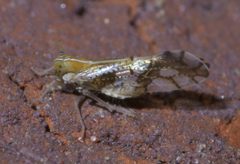
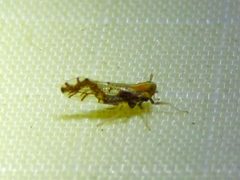
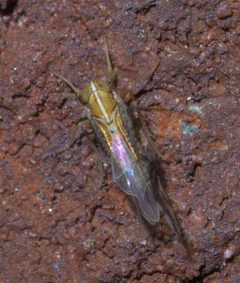
Liburniella ornata, commonly known as the Planthopper, is a small delphacid planthopper found across much of North America. The species is documented in blacklight surveys and is active during late autumn, with observations extending into October and November. As a member of the Delphacidae, it shares the characteristic of planthoppers including a distinctive shape and wing structure. The species has been recorded in diverse ranging from urban yards to natural areas, attracted to artificial light sources at night.
Pronunciation
How to pronounce Liburniella ornata: /lɪˌbɜːr.niˈɛl.lə ɔːrˈnɑː.tə/
These audio files are automatically generated. While they are not always 100% accurate, they are a good starting point.
Identification
Identification to level requires examination of genitalia and detailed wing venation patterns. Distinguished from other Liburniella species and similar delphacids by specific structural characters not visible in field observations. The Liburniella is separated from related delphacid genera by features of the , including the shape of the and vertex, and details of the male genitalia. Blacklight attraction can aid in detection but not identification.
Images
Habitat
Documented from urban and suburban environments where blacklight surveys are conducted, as well as natural areas. The has been recorded in Kansas and other North American localities. Specific microhabitat preferences are not well documented, but as a delphacid planthopper it likely occurs in association with herbaceous vegetation and grasses.
Distribution
North America: documented from Alabama, Arkansas, British Columbia, California, Connecticut, Kansas, and other states and provinces across the continent. The appears to have a broad transcontinental range spanning from the Pacific coast to the Atlantic seaboard and from southern Canada through the United States.
Seasonality
Active have been documented in late autumn, with records from October and early November. This late-season activity pattern distinguishes it from many earlier-emerging planthopper . The species is attracted to blacklight sources during this period.
Behavior
Nocturnally active, with attracted to ultraviolet and visible light sources. This makes the detectable during blacklight surveys conducted in late autumn. The species has been observed alongside other late-season insects including other planthoppers, true bugs, and .
Ecological Role
As a planthopper, likely functions as a phloem feeder on plants, though specific ecological impacts are not documented. Serves as a representative of autumn insect diversity in temperate North American and contributes to the as prey for .
Human Relevance
Documented in citizen science observations and entomological surveys using blacklight techniques. The serves as an indicator of late-season insect activity and contributes to biodiversity records in urban and natural environments. No documented economic or medical significance.
Similar Taxa
- Flatormenis proxima (Northern Flatid Planthopper)Similar size and blacklight attraction ; distinguished by -level characters including wing venation and structure (flatids vs. delphacids)
- Otiocerus stolli (Derbid planthopper)Overlapping seasonality and attraction to light sources; separated by characters including wing shape and
- Other DelphacidaeRequires examination of genitalia and detailed structural characters for definitive separation; many delphacids are superficially similar in size and general appearance
More Details
Taxonomic History
Originally described as Delphax ornata by Stål in 1862, later transferred to the Liburniella. The genus Liburniella is part of the diverse delphacid fauna of North America.
Detection Methods
Most reliably detected through blacklight surveys during late autumn. The is small enough that close examination of collected material or detailed photography is required for confident identification.
Observation Frequency
As of the source data, the had 1,957 observations recorded on iNaturalist, indicating it is regularly encountered by naturalists and entomologists, though specific abundance data are not available.
Sources and further reading
- BugGuide
- GBIF taxonomy match
- iNaturalist taxon
- NCBI Taxonomy
- Catalogue of Life
- Bug Eric: Last Night to Blacklight?
- Bug Eric: Ichneumon Wasp: Ceratogastra ornata
- A flower visiting jewel beetle that is not an Acmaeodera | Beetles In The Bush
- Chrysomelidae | Beetles In The Bush | Page 5
- Spring beetles on Coreopsis flowers | Beetles In The Bush
- Bug Eric: December 2013