
Oecleini
Muir, 1922
Genus Guides
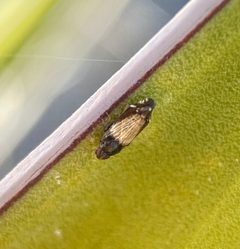
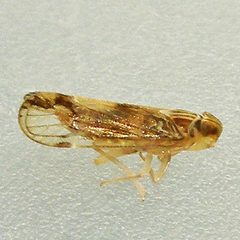
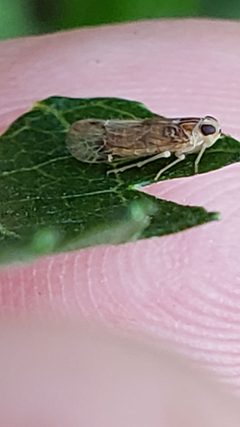
3Oecleini is a tribe of planthoppers (Hemiptera: Cixiidae) established by Muir in 1922. Members exhibit distinctive wing venation patterns, including a trifid MP branch in forewings and I-type hindwing venation with complete fusion of MP3+4 with CuA1. Some possess subterranean adaptations, including a double-grasping coxo-femoral and femoro-tibial system in nymphs for clinging to roots. The tribe includes economically significant species investigated as potential of palm phytoplasmas.
Pronunciation
How to pronounce Oecleini: /ˈiː.kleɪ.naɪ/
These audio files are automatically generated. While they are not always 100% accurate, they are a good starting point.
Identification
Distinguished from other Cixiinae tribes by the combination of trifid MP branch in forewings and I-type hindwing venation with MP3+4 completely to CuA1. Nymphs can be recognized by the double-grasping leg structure. Molecular phylogenetic analysis supports tribal placement, with Coframalaxius and Trigonocranus identified as sister within Oecleini.
Images
Habitat
varies by lineage: some inhabit subterranean environments including caves and soil with completely hypogean ; others occur in natural habitats on palms and other vegetation. The tribe shows ecological diversification from obligate subterranean to surface-dwelling forms.
Distribution
Documented from Madagascar, southern France, and the Neotropics. Distribution is incompletely known due to cryptic habits of subterranean and limited survey effort in many regions.
Diet
Nymphs of subterranean feed on roots and rootlets. Diet of surface-dwelling species not explicitly documented in available sources.
Life Cycle
Some exhibit completely hypogean with all stages occurring underground. Nymphs of subterranean species use specialized leg structures to progress through soil. Details of stages not well documented.
Behavior
Nymphs of subterranean use a double-grasping coxo-femoral and femoro-tibial system to firmly grab roots and rootlets, either for feeding or to progress through soil. Surface-dwelling species have been surveyed on palms.
Ecological Role
Subterranean classified as eutroglophiles. Some species investigated as potential of palm lethal decline phytoplasmas, suggesting possible role in plant transmission.
Human Relevance
Investigated as potential of economically important palm , particularly palm lethal decline phytoplasmas. Research focus has been on identifying transmission vectors to inform disease management in coconut and other palm crops.
Similar Taxa
- Other Cixiinae tribesDistinguished by the unique combination of trifid MP branch in forewings and I-type hindwing venation with complete MP3+4-CuA1 fusion; other tribes exhibit different wing venation patterns.
More Details
Wing Venation Systematics
The reinterpretation of Neotropical based on Oecleini wing venation patterns indicates that previous taxonomic assignments may require revision when venation characters are properly assessed.
Subterranean Adaptations
The double-grasping leg system represents a morphological convergence or retained enabling life in soil and cave environments; its distribution across the tribe requires further study.
Sources and further reading
- BugGuide
- Wikipedia
- iNaturalist taxon
- Catalogue of Life
- Coframalaxius bletteryi gen. et sp. nov. from subterranean habitat in Southern France (Hemiptera, Fulgoromorpha, Cixiidae, Oecleini)
- New planthoppers (Hemiptera: Cixiidae) from Madagascar support the establishment of a new genus, the revised status of Eumyndus perinetensis, and an updated molecular phylogeny of Malagasy Oecleini
- Figure 8 from: Le Cesne M, Bourgoin T, Hoch H, Luo Y, Zhang Y (2022) Coframalaxius bletteryi gen. et sp. nov. from subterranean habitat in Southern France (Hemiptera, Fulgoromorpha, Cixiidae, Oecleini). Subterranean Biology 43: 145-168. https://doi.org/10.3897/subtbiol.43.85804
- Figure 3 from: Le Cesne M, Bourgoin T, Hoch H, Luo Y, Zhang Y (2022) Coframalaxius bletteryi gen. et sp. nov. from subterranean habitat in Southern France (Hemiptera, Fulgoromorpha, Cixiidae, Oecleini). Subterranean Biology 43: 145-168. https://doi.org/10.3897/subtbiol.43.85804
- Figure 6 from: Le Cesne M, Bourgoin T, Hoch H, Luo Y, Zhang Y (2022) Coframalaxius bletteryi gen. et sp. nov. from subterranean habitat in Southern France (Hemiptera, Fulgoromorpha, Cixiidae, Oecleini). Subterranean Biology 43: 145-168. https://doi.org/10.3897/subtbiol.43.85804
- Figure 9 from: Le Cesne M, Bourgoin T, Hoch H, Luo Y, Zhang Y (2022) Coframalaxius bletteryi gen. et sp. nov. from subterranean habitat in Southern France (Hemiptera, Fulgoromorpha, Cixiidae, Oecleini). Subterranean Biology 43: 145-168. https://doi.org/10.3897/subtbiol.43.85804
- Figure 1 from: Le Cesne M, Bourgoin T, Hoch H, Luo Y, Zhang Y (2022) Coframalaxius bletteryi gen. et sp. nov. from subterranean habitat in Southern France (Hemiptera, Fulgoromorpha, Cixiidae, Oecleini). Subterranean Biology 43: 145-168. https://doi.org/10.3897/subtbiol.43.85804
- Figure 2 from: Le Cesne M, Bourgoin T, Hoch H, Luo Y, Zhang Y (2022) Coframalaxius bletteryi gen. et sp. nov. from subterranean habitat in Southern France (Hemiptera, Fulgoromorpha, Cixiidae, Oecleini). Subterranean Biology 43: 145-168. https://doi.org/10.3897/subtbiol.43.85804
- Figure 5 from: Le Cesne M, Bourgoin T, Hoch H, Luo Y, Zhang Y (2022) Coframalaxius bletteryi gen. et sp. nov. from subterranean habitat in Southern France (Hemiptera, Fulgoromorpha, Cixiidae, Oecleini). Subterranean Biology 43: 145-168. https://doi.org/10.3897/subtbiol.43.85804
- Figure 4 from: Le Cesne M, Bourgoin T, Hoch H, Luo Y, Zhang Y (2022) Coframalaxius bletteryi gen. et sp. nov. from subterranean habitat in Southern France (Hemiptera, Fulgoromorpha, Cixiidae, Oecleini). Subterranean Biology 43: 145-168. https://doi.org/10.3897/subtbiol.43.85804
- Figure 7 from: Le Cesne M, Bourgoin T, Hoch H, Luo Y, Zhang Y (2022) Coframalaxius bletteryi gen. et sp. nov. from subterranean habitat in Southern France (Hemiptera, Fulgoromorpha, Cixiidae, Oecleini). Subterranean Biology 43: 145-168. https://doi.org/10.3897/subtbiol.43.85804
- Figure 10 from: Le Cesne M, Bourgoin T, Hoch H, Luo Y, Zhang Y (2022) Coframalaxius bletteryi gen. et sp. nov. from subterranean habitat in Southern France (Hemiptera, Fulgoromorpha, Cixiidae, Oecleini). Subterranean Biology 43: 145-168. https://doi.org/10.3897/subtbiol.43.85804