
Agalliini
Kirkaldy, 1901
Genus Guides
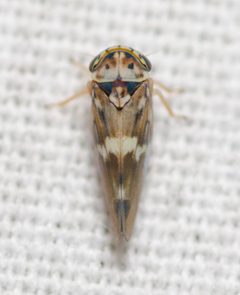
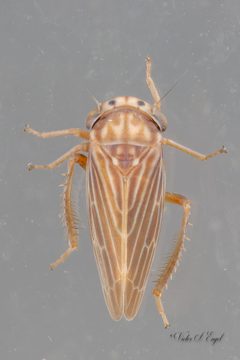
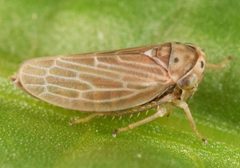
3Agalliini is a tribe of leafhoppers (Hemiptera: Cicadellidae) within Megophthalminae, established by Kirkaldy in 1901. Members are distributed across Asia, with documented in China (Guizhou, Yunnan), Pakistan, and Vietnam. The tribe has been subject to recent taxonomic revision, including descriptions of new and species based primarily on male genitalia characters. Species-level identification relies heavily on aedeagal and pygofer structure.
Pronunciation
How to pronounce Agalliini: /a.ˈɡal.liː.ˌi.niː/
These audio files are automatically generated. While they are not always 100% accurate, they are a good starting point.
Identification
within Agalliini are distinguished primarily by male genitalia characters, particularly the aedeagal shaft structure and pygofer caudodorsal lobe . For example, Spinoagallia freytagi is characterized by macrosetae on the outward pygofer lobe combined with a spine-like process curved ventrally on the inward caudodorsal lobe. Multinervis species lack forewing crossveins in the claval region and exhibit reduced, nearly subgenital plates. Sangeeta sinuomacula differs from by possessing slender processes on the aedeagal shaft rather than lamelliform lateral expansions. Generic-level keys have been published for regional faunas including Pakistan and China.
Images
Distribution
Documented from Guizhou and Yunnan provinces in southwestern China; Pakistan; and Vietnam (Northern and Central regions, including Bach Ma National Park and Phong Dien District). Literature references indicate broader distribution including Afghanistan, India, Japan, and Australia, though these records require verification from primary sources.
Similar Taxa
- BythoscopidaeFormerly treated as a separate containing Agalliinae; now synonymized under Megophthalminae. Historical literature may use this classification.
- Other Megophthalminae tribesShare characteristics but differ in genitalia structure and wing venation patterns used for tribal .
Sources and further reading
- BugGuide
- iNaturalist taxon
- Catalogue of Life
- The leafhopper tribe Agalliini (Hemiptera: Cicadellidae: Megophthalminae) in Pakistan
- A new genus and species of Agalliini from China (Hemiptera, Cicadellidae, Megophthalminae)
- Description of Sangeeta sinuomacula sp. nov. (Hemiptera: Cicadellidae: Megophthalminae: Agalliini) from Yunnan Province of Southwest China
- Extension of the leafhopper genus Multinervis (Hemiptera, Cicadellidae, Megophthalminae, Agalliini) from Northern to Central Vietnam, with the description of one new species