
Fieberiella
Signoret, 1880
Species Guides
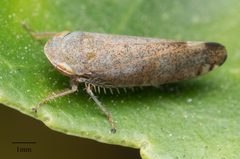
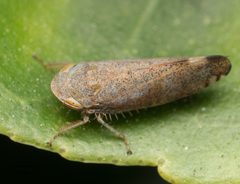
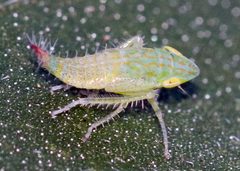
1- Fieberiella florii(privet leafhopper)
Fieberiella is a of leafhoppers in the Cicadellidae, comprising at least 20 described . The genus was established by Signoret in 1880. Members are phloem-feeding insects with documented significance as of plant , particularly phytoplasmas affecting fruit trees. The best-studied species, Fieberiella florii, has been confirmed as a vector of "Candidatus Phytoplasma mali" causing apple proliferation .
Pronunciation
How to pronounce Fieberiella: /fiː.bɛ.riˈɛl.la/
These audio files are automatically generated. While they are not always 100% accurate, they are a good starting point.
Images
Habitat
Agricultural environments including apple orchards, apricot orchards, and surrounding wild vegetation. have been documented in cultivated settings where plants are abundant, with F. florii specifically associated with apple and apricot production systems in Europe and western North America.
Distribution
Europe (northwestern Italy, southern France, Denmark); western North America (western Oregon, USA). GBIF records indicate additional presence in Greece (Attica, Kefallinia).
Seasonality
Fieberiella florii exhibits in field conditions (one per year), though capable of producing successive generations without under artificial conditions. Present in apple orchards during summer months when alternative have shifted to non-apple .
Diet
Phloem sap feeding on plants. Specific host plant associations documented for F. florii include apple (Malus domestica), apricot, and periwinkle (Vinca). The exhibits high polyphagy, feeding on diverse plant .
Host Associations
- Malus domestica - plant and transmission siteapple proliferation
- Prunus armeniaca - plantapricot, chlorotic leafroll context
- Vinca - plantperiwinkle, used in transmission trials
- Candidatus Phytoplasma mali - confirmed transmission to apple seedlings
Life Cycle
One per year under natural field conditions. Under artificial conditions, successive generations can develop without . Seasonal cycle patterns documented in western Oregon .
Behavior
Confirmed competence for transmitting "Candidatus Phytoplasma mali" to healthy apple seedlings through phloem feeding. Acquisition and inoculation of phytoplasma demonstrated in laboratory trials. Despite high percentages of naturally infected individuals in field (5.7% in apple orchards, 20.0% in surrounding wild vegetation), field transmission risk appears limited by low .
Ecological Role
in agricultural . Contributes to of apple proliferation disease and potentially other phytoplasma-associated diseases of stone and pome fruits. High polyphagy creates opportunities for acquisition from diverse wild vegetation and transmission to cultivated crops.
Human Relevance
Agricultural pest significance as of economically important plant . F. florii specifically implicated in spread of apple proliferation , a major constraint in European apple production. Monitoring and management considerations for in orchards.
Similar Taxa
- Cacopsylla melanoneuraPrimary of "Candidatus Phytoplasma mali"; F. florii assumes greater epidemiological significance during summer when C. melanoneura feeds on alternative
- other Deltocephalinae leafhoppersSimilar and use; requires expert identification to distinguish at level
Sources and further reading
- BugGuide
- Wikipedia
- GBIF taxonomy match
- iNaturalist taxon
- NCBI Taxonomy
- Catalogue of Life
- Bug Eric: City Nature Challenge 2024 Recap
- Host Plants and Seasonal Cycle of a Leafhopper Fieberiella florii in Western Oregon12
- Fieberiella florii (Homoptera: Auchenorrhyncha) as a Vector of “Candidatus Phytoplasma mali”
- LEAFHOPPER FAUNA OF APRICOT ORCHARDS IN SOUTHERN FRANCE : OBSERVATIONS ON THE BIOLOGY OF A PRESUMED VECTOR OF CHLOROTIC LEAFROLL, FIEBERIELLA FLORII STÅL ; TRANSMISSION TRIALS