
Cicadettana
Marshall & Hill, 2017
Species Guides
4- Cicadettana calliope(Southern Grass Cicada)
- Cicadettana camerona
- Cicadettana kansa(Kansas Grass Cicada)
- Cicadettana texana(Texas Prairie Cicada)
Cicadettana is a of small cicadas established in 2017, previously classified under Cicadetta. These insects measure 12–20 mm in body length and produce high-pitched songs. The genus comprises five , with one species to Hispaniola and the remainder distributed across the eastern and central United States.
Pronunciation
How to pronounce Cicadettana: //ˌsɪkəˈdɛtəˌnə//
These audio files are automatically generated. While they are not always 100% accurate, they are a good starting point.
Identification
Distinguished from the closely related Cicadetta by taxonomic revision based on molecular and morphological data. The high-pitched song and small body size (12–20 mm) separate them from most larger North American cicadas. Geographic distribution helps distinguish : C. calliope east of the Rocky Mountains excluding northern states, C. c. floridensis in the Southeast, C. camerona restricted to Cameron County, Texas, C. kansa in the central and southern Great Plains, C. texana in south-central Texas, and C. ramosi on Hispaniola.
Images
Appearance
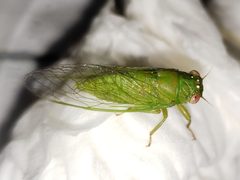
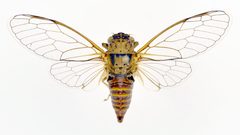
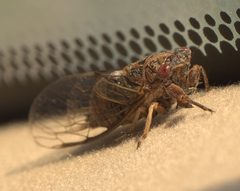
Small cicadas with body lengths of 12–20 mm. Inconspicuous in appearance relative to larger .
Habitat
Commonly found on grass or low shrubs. occupy diverse across their respective ranges including eastern deciduous forests, southeastern coastal plains, central grasslands, and subtropical thorn scrub in Texas.
Distribution
United States east of the Rocky Mountain divide (five ), with C. ramosi to Hispaniola. C. calliope occurs east of the Rocky Mountains excluding northern and northeastern states; C. c. floridensis in southeastern states; C. camerona in southern Texas (Cameron County); C. kansa in central and southern Great Plains states; C. texana in south-central Texas.
Behavior
Produces high-pitched songs. Commonly found on grass or low shrubs rather than in tree .
Similar Taxa
- CicadettaPreviously classified under this ; separated in 2017 based on phylogenetic analysis. Closest known relatives are European, eastern Asian, and Micronesian Cicadetta .
- Larger North American cicada genera (e.g., Magicicada, Neotibicen)Distinguished by substantially smaller body size (12–20 mm vs. 25–50+ mm) and higher-pitched songs.
More Details
Taxonomic history
established by Marshall & Hill in 2017 following revision of the tribe Cicadettini. All included were previously placed in Cicadetta.
Type species
Cicadettana calliope calliope, originally described as calliope Walker, 1850.