
Cicadettini
Buckton, 1890
True Largeclasper Cicadas
Genus Guides
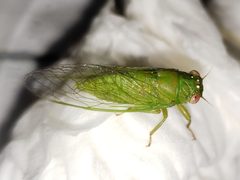
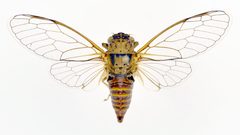
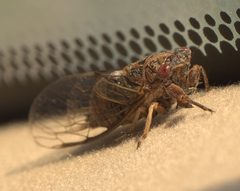
1Cicadettini is a large tribe of cicadas within the Cicadidae, comprising at least 110 and over 520 described . Members are distributed worldwide except for the Neotropics, with notable radiations in Australia, New Zealand, South Africa, and the Palearctic. The tribe includes diverse ecological , from grassland inhabitants to species associated with seasonal riverine floodplains. Many species produce species-specific acoustic signals used for mate recognition.
Pronunciation
How to pronounce Cicadettini: //sɪkəˈdɛtɪniː//
These audio files are automatically generated. While they are not always 100% accurate, they are a good starting point.
Identification
Cicadettini is distinguished from other tribes primarily by male genitalia , particularly the structure of claspers and . within the tribe are often small to medium-sized (9–15 mm body length in many grassland ). Identification to genus and species level typically requires examination of male genitalia, detailed analysis of calling song structure, and sometimes genetic data, as many species are morphologically cryptic.
Images
Habitat
are diverse and -dependent. Australian members occupy arid and semi-arid grasslands, shrublands, and vegetation associated with seasonal riverine floodplains. Some are tightly associated with specific soil types, including poorly drained, clay-rich soils. Moroccan species occur in North African habitats. New Zealand species have radiated across diverse terrestrial environments.
Distribution
Worldwide distribution except the Neotropics. Documented from Australia (Queensland, New South Wales, Northern Territory, South Australia, Western Australia), New Zealand, South Africa (Eastern Cape, KwaZulu-Natal), Pakistan (Indomalayan and Palaearctic ecozones), Morocco, Greece, and other Palearctic regions.
Diet
Nymphs feed on xylem fluid from tree and shrub roots. feed on tree sap using .
Life Cycle
Nymphs develop underground, feeding on root xylem. Duration of nymphal stage varies: some have multi-year cycles (including periodical patterns in some lineages), while others may complete development in shorter timeframes. are short-lived, typically surviving four to six weeks. Females deposit in slits cut into bark of twigs using a saw-toothed ovipositor.
Behavior
Males produce -specific calling songs using abdominal tymbals. Song structure varies substantially: some species emit simple repetitive ticking or buzzing echemes, while others produce complex songs with multiple elements, rapid amplitude changes, and abrupt frequency modulations. Many grassland species are mobile and wary, while others are relatively sedentary. Acoustic signaling is the primary mechanism for mate location and species recognition.
Ecological Role
As xylem feeders, nymphs and transfer nutrients between plant roots and . Mass emergences may provide pulsed food resources for . The tribe harbors obligate bacterial endosymbionts that manufacture , representing a specialized nutritional mutualism.
Human Relevance
Periodical cicadas ( Magicicada), historically classified within Cicadettini, are subjects of intensive ecological and evolutionary research due to their prime-numbered and mass events. Some are used in educational laboratory exercises to teach . The loud choruses of some species contribute to summer soundscapes in inhabited areas.
Similar Taxa
- CicadatriniBoth are tribes within Cicadettinae; distinguished by male genitalia and song characteristics
- TaphuriniOverlaps in distribution and ; Cicadettini distinguished by genitalic and acoustic traits
More Details
Taxonomic Scope
The tribe has undergone substantial revision, with many new erected in 2012 (Simona, Chelapsalta, Mugadina, Galanga, Punia, Yoyetta, and others) based on combined morphological, acoustic, and molecular data.
Acoustic Diversity
Calling songs are highly diagnostic within Cicadettini. Studies demonstrate song stability across wide geographic ranges (e.g., Simona erema across 2200 km), with song parameters appropriate for -level discrimination despite some partial overlap between closely related species.
Evolutionary History
Phylogenetic studies using barcode sequences ( C Oxidase 1) support monophyly of described and reveal genetic structure within . New Zealand cicadas within this tribe originated from Australian and New Caledonian ancestors, representing a documented island radiation.
Sources and further reading
- BugGuide
- Wikipedia
- iNaturalist taxon
- NCBI Taxonomy
- Catalogue of Life
- How Do Cicadas Know When to Emerge from the Ground?
- A new genus and new species of Cicadettini (Hemiptera: Cicadidae: Cicadettinae) from Pakistan
- A new genus and three new species of South African Cicadettini (Hemiptera: Cicadidae: Cicadettinae)
- An impressive new species of mugadina from queensland with notes on a congeneric species (cicadidae: cicadettinae: cicadettini)
- Three new cicada species of the genus Gudanga Distant (Insecta: Cicadidae: Cicadettinae: Cicadettini) from Queensland; comparative morphology, songs, behaviour and distributions
- New species of Simona Moulds, 2012 and Chelapsalta Moulds, 2012 cicadas (Cicadidae: Cicadettinae: Cicadettini) from Australia: comparative morphology, songs, behaviour and distributions
- Two new genera and five new species of Mugadina-like small grass cicadas (Hemiptera: Cicadidae: Cicadettini) from Central and Eastern Australia: comparative morphology, songs, behaviour and distributions
- Five new species of grass cicadas in the genus Graminitigrina (Hemiptera: Cicadidae: Cicadettinae: Cicadettini) from Queensland and Northern Territory, Australia: comparative morphology, songs, behaviour and distributions
- Morphology, songs and genetics identify two new cicada species from Morocco: Tettigettalna afroamissa sp. nov. and Berberigetta dimelodica gen. nov. & sp. nov. (Hemiptera: Cicadettini)