
Clastoptera querci
Thompson, Halbert & Rothschild, 2020
Clastoptera querci is a of spittlebug in the Clastopteridae, described in 2020. The specific epithet "querci" indicates an association with oak (Quercus), suggesting a relationship with oak trees. As a member of the spittlebug superfamily Cercopoidea, this species shares the characteristic nymphal habit of producing protective foam masses on host plants. The Clastoptera is the primary genus within its family and is distributed across North America.
Pronunciation
How to pronounce Clastoptera querci: /klæstɒptɪrə kwɛrki/
These audio files are automatically generated. While they are not always 100% accurate, they are a good starting point.
Identification
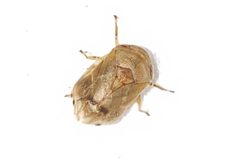
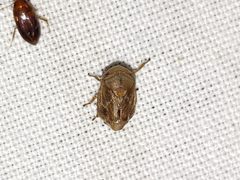
Distinguished from other Clastoptera by genitalic characters and association with oak. are small, compact froghoppers typical of the , with reduced wing venation. The specific epithet "querci" distinguishes this species as oak-associated. Positive identification requires examination of male genitalia or molecular analysis.
Images
Habitat
Associated with oak trees (Quercus spp.), suggesting woodland and forest where oaks are present.
Distribution
Described from material in the southeastern United States; precise range requires further documentation. The Clastoptera is broadly distributed across North America.
Diet
Nymphs feed on xylem sap from oak plants. likely continue feeding on plant sap.
Host Associations
- Quercus - primary plantSpecific epithet indicates oak association; nymphs develop on oak trees
Life Cycle
Undergoes with , nymph, and stages. Nymphs produce characteristic spittle masses—foam produced from anal secretions mixed with air—that protect them from desiccation and while feeding on plant xylem.
Ecological Role
As xylem feeders, nymphs and extract dilute sap from oak trees. The spittle masses produced by nymphs may serve as microhabitats for other organisms.
Similar Taxa
- Clastoptera obtususCongeneric spittlebug; also recorded as prey of the Clitemnestra bipunctata; distinguished by preferences and genitalic
- Other Clastoptera species contains multiple oak-feeding ; reliable identification requires examination of genitalia or molecular markers
Sources and further reading
- BugGuide
- GBIF taxonomy match
- iNaturalist taxon
- Catalogue of Life
- Bumpy, sticky times for oaks in cities: Oak lecanium scale, Parthenolecanium quercifex — Bug of the Week
- Why a Little Bit of This Tree Pest is a Good Thing in Urban Landscapes
- Bridging Borders to Battle Invasive Species: Reflections on an International Fellowship in the U.S.
- Bug Eric: January 2012
- How One Entomologist Made His Way From Academic Probation to the Smithsonian
- Friday Flower – Pawpaw | Beetles In The Bush