
Ephemerella subvaria
McDunnough, 1931
red quill, Dark Hendrickson
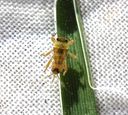
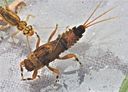
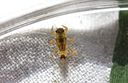
Ephemerella subvaria is a spiny crawler mayfly in the Ephemerellidae. The was described by McDunnough in 1931. It is widely distributed in the eastern United States with limited occurrence in the upper Midwest. A 2019 record from Ohio represents the first state documentation, with specimens reared from nymphs collected in March to in late April.
Pronunciation
How to pronounce Ephemerella subvaria: /ɛfɛmɛrˈɛlə sʌbˈværiə/
These audio files are automatically generated. While they are not always 100% accurate, they are a good starting point.
Identification
As a member of Ephemerellidae, possesses the characteristic spiny gills on abdominal segments that distinguish this from other families. Specific identification features distinguishing E. subvaria from are not provided in available sources.
Images
Habitat
Streams in forested watersheds. The Ohio occurs in Cedar Run and the Mad River, Champaign County, within remnants of prior swamp streams in western-central Ohio. These locations are hypothesized to serve as refugia for this disjunct population.
Distribution
Eastern United States. Upper Midwest distribution limited to northern Michigan and northern Wisconsin (absent from southern counties of those states and from Illinois). Rare in Indiana and northern Kentucky. First recorded from Ohio in 2019.
Seasonality
Nymphs active in early spring; has been observed in late April. In Ohio, nymphs collected March 26, 2019 produced subimagos April 27, 2019 and imagos April 30, 2019 when reared in controlled conditions.
Life Cycle
Hemimetabolous development with aquatic nymphal stage and terrestrial stage. Nymphs collected in March can be reared to adult within approximately one month under temperature-controlled conditions. Specific duration of nymphal development in natural conditions is not documented.
Human Relevance
Known among fly fishers as the "Dark Hendrickson," suggesting importance as a model for fishing flies. The "red quill" also indicates recognition in angling literature.
Similar Taxa
- Other Ephemerella species share the spiny and require detailed examination for specific identification
More Details
Conservation significance
The Ohio may represent a relict distribution, persisting in stream remnants of a former swamp . This disjunct occurrence suggests potential vulnerability to alteration.
Sources and further reading
- BugGuide
- Wikipedia
- GBIF taxonomy match
- iNaturalist taxon
- NCBI Taxonomy
- Catalogue of Life
- Acentria ephemerella Archives - Entomology Today
- The Lepidopteran Life Aquatic
- ICE 2022: A Graduate Student's Perspective
- A New Record Mayfly Ephemerella subvaria McDunnough (Ephemeroptera, Ephemerellidae) from Ohio, USA