
Neoleptophlebia mollis
(Eaton, 1871)
soft prong-gilled mayfly
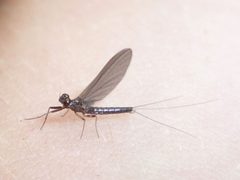
Neoleptophlebia mollis is a of prong-gilled mayfly in the Leptophlebiidae. The species was first described by Eaton in 1871. It belongs to a characterized by forked gills on abdominal segments, a trait reflected in the "prong-gilled mayfly." The specific epithet "mollis" (Latin for "soft") likely refers to some aspect of the species' or texture.
Pronunciation
How to pronounce Neoleptophlebia mollis: /ˌniː.oʊˌlɛp.təˈfliː.bi.ə ˈmɒl.ɪs/
These audio files are automatically generated. While they are not always 100% accurate, they are a good starting point.
Identification
Members of the Neoleptophlebia can be distinguished from related genera by their prong-gilled condition, where the abdominal gills are forked or divided. -level identification within the genus requires examination of detailed morphological features such as genitalia, wing venation, and gill structure. N. mollis would be distinguished from through subtle differences in these characters as described in original species descriptions.
Images
Distribution
Recorded from Vermont, United States, with additional distribution records within the US. The full range extent is not well documented in available sources.
Ecological Role
As with other , N. mollis likely serves as an important food source for aquatic and terrestrial during its periods, contributing to nutrient transfer between aquatic and terrestrial .
Similar Taxa
- Neoleptophlebia spp.Other in the same share the prong-gilled characteristic and require detailed morphological examination to distinguish from N. mollis.
- Other LeptophlebiidaeRelated within the may appear similar in general body form but differ in gill structure and other diagnostic features.