
Limonia nubeculosa
Meigen, 1804
short-palped cranefly, Sixspot Cranefly
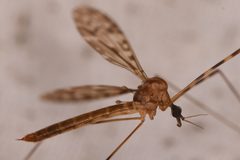
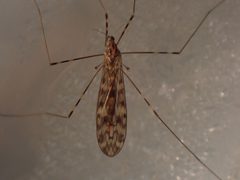
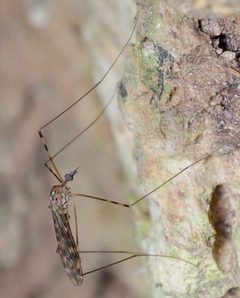
Limonia nubeculosa is a small crane fly in the Limoniidae, commonly known as the short-palped cranefly or Sixspot Cranefly. measure 9–11 mm in body length and are recognized by their distinctive wing patterning and banded legs. The species is widespread across the Palearctic and Nearctic regions, with documented from Europe through Asia to North America. It is primarily associated with forest and exhibits an extended period from spring through late autumn.
Pronunciation
How to pronounce Limonia nubeculosa: /lɪˈmoʊniə ˌnjuːbɛkjəˈloʊsə/
These audio files are automatically generated. While they are not always 100% accurate, they are a good starting point.
Identification
Distinguished from similar crane flies by the combination of: small body size (9–11 mm), yellow with three distinct dark rings, and dark patterning restricted to the wing margin. The specific epithet 'nubeculosa' (meaning 'little cloud') refers to the wing markings. Separation from other Limonia requires examination of wing venation and male genitalia.
Images
Appearance
Body length 9–11 mm. Wings with dark patterning along margin. yellow with three dark rings.
Habitat
Forested environments. Has been observed in caves during summer months, where it may aestivate in large .
Distribution
Holarctic distribution. Native to: Europe (widespread including British Isles, Scandinavia, Mediterranean islands, and east to Ukraine and European Russia), North Africa (Morocco, Algeria, Tunisia), Western Asia (Turkey, Cyprus, Israel, Caucasus region), Central and East Asia (Kazakhstan, Korea, Japan, Russian Far East including Kamchatka and Sakhalin), and North America (Alaska, Canada, and western contiguous United States south to Colorado and California).
Seasonality
period extends from April through November.
Behavior
May aestivate in caves during summer months, forming large .
Similar Taxa
- Other Limonia speciesSimilar general ; distinguished by wing pattern details, leg banding, and genitalia structure
- Other LimoniidaeSmall crane flies share general body plan; L. nubeculosa identified by specific combination of size, leg coloration, and wing markings