
Dactylolabis montana
Osten Sacken, 1860
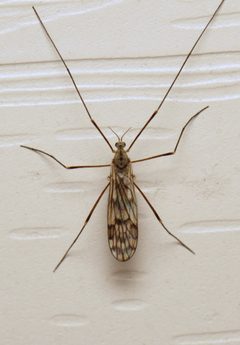
Dactylolabis montana is a of limoniid crane fly inhabiting madicolous environments in eastern North America. The species develops in thin water films on rock surfaces, with distinct larval and pupal stages described. It occurs from Ontario and Newfoundland south to Kansas, Arkansas, Mississippi, Tennessee, and South Carolina.
Pronunciation
How to pronounce Dactylolabis montana: //ˌdæktɪloʊˈleɪbɪs mɒnˈtænə//
These audio files are automatically generated. While they are not always 100% accurate, they are a good starting point.
Identification
Larvae can be distinguished from the related D. hudsonica using morphological characters detailed in published larval keys. Specific diagnostic features for are not documented in available sources.
Images
Habitat
Madicolous : thin water films flowing over rock surfaces (hygropetric environments). These are specialized aquatic microhabitats characterized by continuously wet rock with minimal water depth.
Distribution
Eastern North America: Canada (Ontario to Newfoundland) and USA (south to Kansas, Arkansas, Mississippi, Tennessee, and South Carolina).
Life Cycle
Development includes larval and pupal stages in madicolous . Specific duration of developmental stages or voltinism (number of per year) is not documented.
Similar Taxa
- Dactylolabis hudsonicaCo-occurs in eastern North American madicolous ; larvae require morphological examination for separation
More Details
Taxonomic note
Originally described as Limnophila montana by Osten Sacken in 1859 (or 1860), later transferred to Dactylolabis. The basionym reflects historical placement in Tipulidae sensu lato, now classified in Limoniidae.
Research history
and stages were formally described in a 1988 Canadian Entomologist paper, which provided the first larval key and detailed morphological descriptions of larvae and pupae for this .
Sources and further reading
- BugGuide
- Wikipedia
- GBIF taxonomy match
- iNaturalist taxon
- NCBI Taxonomy
- Bumble Bee Mellowing Out on the Mallow | Bug Squad
- Little Spurthroated Grasshopper
- Whitecrossed Grasshopper
- Study Identifies Areas in U.S. Most Suitable for Invasive Giant Hornet
- Cattle Grazing Helps Pollinators in Sagebrush Rangelands
- Cicadas Race to Catch Up With Their Evolving Endosymbionts
- THE MADICOLOUS TIPULIDAE (DIPTERA) OF EASTERN NORTH AMERICA, WITH DESCRIPTIONS OF THE BIOLOGY AND IMMATURE STAGES OF DACTYLOLABIS MONTANA (OSTEN SACKEN) AND D. HUDSONICA ALEXANDER (DIPTERA: TIPULIDAE)