
Dactylolabis
Osten Sacken, 1860
Species Guides
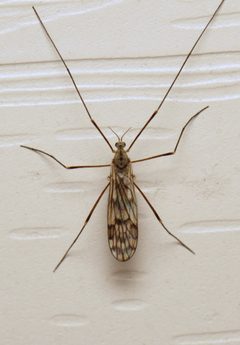
4Dactylolabis is a of crane flies in the Limoniidae, distinguished by its placement in the Dactylolabinae. The genus contains multiple distributed across several subgenera. At least some species are known to be madicolous, inhabiting thin water films on rock surfaces in seepage areas. The genus was established by Osten Sacken in 1860.
Pronunciation
How to pronounce Dactylolabis: //ˈdæktɪloʊˌleɪbɪs//
These audio files are automatically generated. While they are not always 100% accurate, they are a good starting point.
Identification
Dactylolabis is distinguished from other Limoniidae by characteristics warranting its own Dactylolabinae; specific diagnostic features for the are not detailed in available sources. Larvae of D. montana and D. hudsonica can be separated using morphological characters detailed in specialized keys.
Images
Habitat
Madicolous —thin water films on rock surfaces, typically in seepage areas—have been documented for some . The full habitat range for the is not comprehensively described.
Distribution
Documented from eastern North America for D. montana and D. hudsonica. Other occur in various regions, but specific distributions are not well summarized in available sources.
Life Cycle
Larval and pupal stages have been described for D. montana and D. hudsonica. stages are adapted to madicolous , developing in thin water films on rock surfaces.
Behavior
Madicolous lifestyle: larvae inhabit and develop in thin water films flowing over rock surfaces in seepage areas.
Similar Taxa
- Other Limoniidae generaDactylolabis is separated into its own Dactylolabinae, distinguishing it from all other Limoniidae placed in different subfamilies.
More Details
Subgeneric classification
The contains four recognized subgenera: Bothrophorus, Coenolabis, Dactylolabis (nominate), and Eudactylolabis.
Taxonomic note
The Dactylolabinae is , containing only the Dactylolabis, indicating distinctive morphological or phylogenetic characteristics.