
Pseudotephritis corticalis
(Loew, 1873)
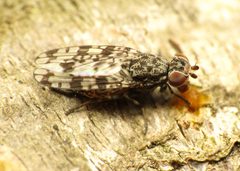
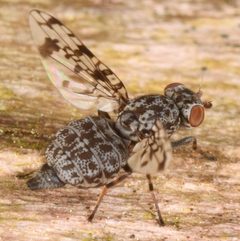
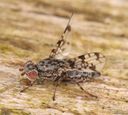
Pseudotephritis corticalis is a of picture-winged fly in the Ulidiidae, first described by Loew in 1873. The species is known from a restricted distribution in Northern Europe, with records from Germany, Denmark, Norway, and northwest Russia. As a member of the Otitinae , it belongs to a group of flies characterized by patterned wings. The species has been documented in 76 iNaturalist observations, suggesting it is not exceptionally rare within its range.
Pronunciation
How to pronounce Pseudotephritis corticalis: /ˌsjuːdoʊteˈfrʌɪtɪs ˌkɔːrtɪˈkɑːlɪs/
These audio files are automatically generated. While they are not always 100% accurate, they are a good starting point.
Identification
Pseudotephritis corticalis can be distinguished from by its membership in the Pseudotephritis, which is characterized by distinctive patterned or 'picture' wings typical of the Ulidiidae . Within the genus, -level identification requires examination of wing pattern details and genitalia. The species name 'corticalis' (relating to bark) may suggest an association with woody substrates, though this has not been confirmed. Separation from other Pseudotephritis species, particularly P. approximata and P. maura, requires careful comparison of wing markings and male terminalia.
Images
Distribution
Germany, Denmark, Norway, and northwest Russia. GBIF records confirm presence in Norway and Sweden.
Similar Taxa
- Pseudotephritis approximataOverlapping distribution in Northern Europe; requires examination of wing patterns and genitalia for separation.
- Pseudotephritis mauraSimilar size and wing pattern; distinguished by subtle differences in wing markings and male genitalia structure.
More Details
Taxonomic History
The was first described by Friedrich Hermann Loew in 1873, a prominent German entomologist who made substantial contributions to dipteran . The specific epithet 'corticalis' derives from Latin 'cortex' (bark), though the biological significance of this name remains undocumented in available sources.